
New conditions for support for those returning to Estonia
70 groups start their Estonian studies
Meet our newest team members!
Prime Minister becomes first guest at Estonian language café
Estonian Language Centre in Narva to show series of Estonian films
Upcoming procurements and application rounds
‘Ku-Ky’ fair coming in March
New conditions for support for those returning to Estonia

In accordance with a regulation of the Minister of Culture approved at the end of last year, support for those returning to Estonia will be paid out according to new terms and conditions as of 4 February 2019. The main change is that families experiencing socioeconomic difficulties can now apply for more than 2000 euros in support.
Applications for the support can be lodged by anyone with Estonian citizenship or ethnic Estonians with an Estonian residence permit who:
left Estonia at least 10 years ago or were born in a foreign country and who are coming (back) to Estonia with underaged children or to be with their underaged children; or
are up to the age of 30, were born in a foreign country, have permanently returned to Estonia and obtained their Master’s degree or doctorate abroad; or
left Estonia at least 10 years ago or were born in a foreign country and who suffer from total incapacity for work; or
permanently returned to Estonia no more than six months prior to lodging the application and whose place of residence and the place of residence of any children who returned with them is registered in the Population Register of the Republic of Estonia; or
due to their economic and social status require support to return to Estonia because the means their family has for coping on an everyday basis are below the limit valid in Estonia.
For more information about the support see here
70 groups start their Estonian studies

A total of 1120 people started their Estonian studies in 70 new groups around the country in February. Half of the groups are based in Ida-Viru County and the other half mainly in Tallinn, although two groups were also opened in Tartu and Pärnu. Studies of the national language are available at the A1, A2, B1, B2 and C1 levels.
In addition to courses, our language clubs and cafés give people the chance to learn and practise Estonian. A range of Estonian language learning options is also offered by the Estonian Unemployment Insurance Fund, and the language can be studied as part of the adaptation programme financed by the Ministry of the Interior.
Estonian language studies are financed by the Ministry of Culture and via the European Social Fund project ‘Terms and conditions of the provision of support for activities promoting integration in Estonian society’.
A number of new faces joined the Integration Foundation in December and January.
 Taking up her post as the director of the Estonian Language Centre in Narva on 3 December was Margarita Källo, who has broad-ranging experience of leading projects and working with people from different cultural backgrounds in both Estonia and Finland. She obtained her higher education in social work and international relations and has worked in both business and banking. As a multilingual and multicultural person herself she is aware of the attitudes and approaches that different people can have, whatever their linguistic or cultural background might be.
Joining the Estonian Language Centre in Narva as a teacher on 17 December was Krismar Rosin. Born and raised in Pärnu, he says he never expected to end up teaching Estonian in Narva. He has previously involved himself in social work and tourism and worked for a time as a journalist. In his younger years he tried his hand at a number of jobs, the strangest of which he says was without doubt working in a lollipop factory. Prior to relocating to Narva he worked as an interest group leader and social studies teacher at Ahtme Gymnasium in Kohtla-Järve.
Starting work at the Estonian Language Centre in Tallinn on 14 January were consultant Liina Leetsi and assistant Maris Liiders.
Liina, who has teaching experience, mainly deals with English-speaking clients and Estonians returning to the country. She finds it easy to establish a rapport with those she consults thanks to the year she spent as a volunteer in Armenia. This allows her to sympathise with their concerns and share in their delight when it comes to cultural differences and learning a new language.
Maris, who has a degree in biology from the University of Tartu, has worked as a researcher, as a senior manager in a company and as the head of the Department of Education and Social Services of Harju County Government.
Prime Minister becomes first guest at Estonian language café

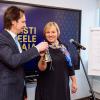
A new series of events was launched at the Estonian Language Centre in Tallinn on 5 February with the very first Estonian language café. Those taking part were not told in advance who the special guest would be, so they were all the more surprised to discover that it was none other than Prime Minister Jüri Ratas himself! The language cafés are held at the centre every Tuesday evening and everyone interested in attending is welcome to do so. Regular information about guests and registration can be found on the centre’s Facebook page.
Estonian Language Centre in Narva to show series of Estonian films

The Estonian Language Centre in Narva is marking the Year of the Estonian Language with special film screenings. The aim of the evenings is on the one hand to promote the many facets of modern Estonian cinema to visitors to the centre, while on the other hand it is an excellent opportunity for the audience to brush up on their Estonian listening skills. As a rule the films have subtitles in both Russian and English, so the evenings are also suited to less proficient users of Estonian. There will be a warm-up game with the audience before each film, and afterwards a discussion on its themes.
At 18:00 on 27 February everyone is invited to Narva’s Apollo cinema to watch the comedy caper Sangarid, which takes viewers back in time to the 1980s. Three young Estonians escape from the Soviet Union and go abroad in search of the kind of life for themselves that they have seen in such shows as Miami Vice, Knight Rider and Santa Barbara. They are met as true heroes in Sweden for having broken free from the Iron Curtain. But once media interest in them dies down, they discover that they have become little more than troublesome immigrants. To make a living they have to start doing something as ridiculous as work! But the lads are not quitters by nature and put a series of crazy plans into action to make their breakthrough in the West.
Upcoming procurements and application rounds

The Integration Foundation will be launching a number of procurements and application rounds in the near future, two of which we will be organising for the first time. Namely, we will be opening an application round for the organisation of sports and cultural events all over Estonia being funded by the Ministry of Finance. We will also be launching a procurement to find a partner to teach Estonian and English to entrepreneurs and key employees of companies in Ida-Viru County. In February we will also be launching a procurement for the organisation of language camps for young foreign Estonians, and on 25 February opening a round of applications for support for foreign Estonian cultural associations. You can find out more about the competitions we are organising at here.

The ‘Ku-Ku’ Estonian Language fair will shortly be held once again. In Narva the fair will take place in Narva College of the University of Tartu from 11:00-16:00 on 9 March, while in Tallinn it will be held at the Song Festival Grounds from 11:00-17:00 on 23 March.
The fair is designed to promote different ways of learning Estonian. As part of the event you can:
take a look at the latest study materials;
play brand new language-learning games;
find the right learning format for you;
obtain advice on preparing for the state language exam;
find out all about language immersion;
attend a language café; and
take part in a workshop highlighting the differences between language-learning methods and showing you how to choose the method that is right for you and how to use everyday objects and opportunities to improve your language skills.
Adult learners with different levels of Estonian and different learning needs are welcome to attend the fair.
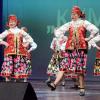
There will be a prize draw on the hour, every hour. Plus there will be a café, and fun activities will be organised for children. At the Narva fair there will be entertainment from the folk dance group ‘Päikeseratas’, the Hot Arabian Show and the Snake Show. In Tallinn visitors will be entertained by the ‘Fox’ roller-figure skating club, the ‘Leigarid’ folk dance association, fire-wielding magician Maikl and the AN2M acrobats.
Admission to the fair is free of charge.
Organisation of the language fair is being financed by the Ministry of Culture and via the European Social Fund project ‘Terms and conditions of the provision of support for activities promoting integration in Estonian society’.
For further information please contact:
https://www.integratsioon.ee/en/ku-ky
 The registration period for Estonian language courses will open soon and will be available twice a year - January and August.
 As of 23. January 2019, the umbrella organisations of national minority cultural associations can apply for support for their activities. The application round is designed to contribute to the sustainable operations and systematic development of the umbrella organisations and their members in Estonia. This year’s application round, financed by the Ministry of Culture, is valued at €457,000. Applications can be submitted to the Integration Foundation until 25 February.
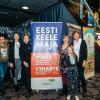
 On January 15th the Integration Foundation has opened the long-awaited Tallinn Estonian language house, were people of various backgrounds with different native languages can learn and practice Estonian as well as receive practical advice about living, learning and working in Estonia.
 Since 2 January 2019 the Integration Foundation has been based in Narva.
 There is no better sight than an entire room full of people from Narva with their eyes glued to a cinema screen wondering whether the Tondikaku family will save the forest. Will the owls hoot happily ever after while the lynx frolics in the crisp white snow? Half the audience were biting their nails as they waited anxiously to find out, and some were even brought to tears!
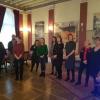 Irene Käosaar, the director of the Integration Foundation, says that the lack of qualified language teachers represents one of the greatest restrictions on the teaching of Estonian to people of other nationalities living in the country. “Interest in learning the language is growing all the time,” she explained. “So far the Integration Foundation’s been outsourcing all of its Estonian courses, but in 2019 we’re opening Estonian Language Centres in Tallinn and Narva, and in order to boost the number of people studying we’ll be starting to organise language courses ourselves as well. That’s why we worked with the University of Tartu to develop a special training programme that focuses on the specific nature of teaching Estonian as a second language to adults. I’m really glad that the 10 teachers we chose from among the dozens of candidates last spring have now all been awarded their diplomas!”
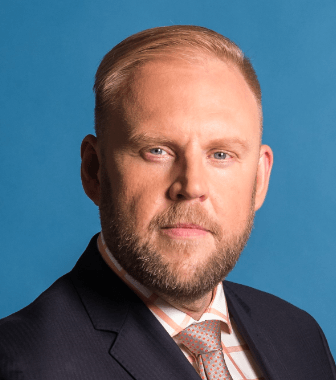 The debate will be led by journalist Urmas Vaino (photo).
 The dates for the ‘KU-ky’ Estonian language fairs have now been locked in. In Narva the fair will take place in Narva College of the University of Tartu on 9 March 2019. In Tallinn the fair will take place at the Song Festival Grounds on 23 March 2019.
  The Integration Foundation, in cooperation with the University of Tartu, is training Estonian language teachers for the Estonian Language Centres and language schools. While the course for the teachers from the Estonian Language Centres will carry on until the end of December, the additional in-service training for existing teachers came to an end on 22 October.
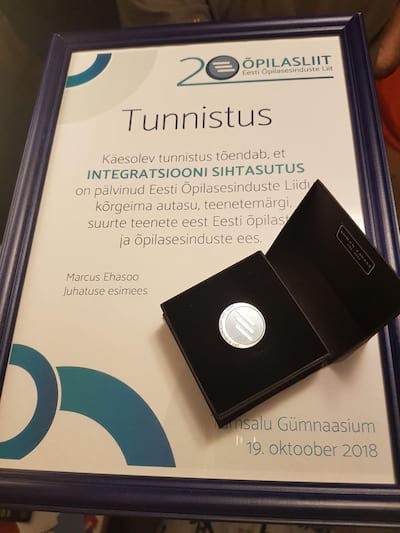 19 October was a fantastic day for the Integration Foundation, as we received recognition on a number of fronts.
 Rakvere Theatre offers translation into Russian for a number of its productions. Those wishing to make use of the option are provided with a tablet computer on which the simultaneous translation is presented throughout the performance. At the moment three plays are running at the theatre for which Russian translations are available: See kõik on tema, Lendas üle käopesa and Kuni ta suri.