New activities introducing Estonian culture and customs are launched in four regions of Estonia

In 2026, new action programmes are launched in four different regions of Estonia with the aim of introducing participants to Estonian culture and customs and creating opportunities for people from different linguistic and cultural backgrounds to participate in society. 

All adults residing in Estonia on a legal basis and whose native language is not Estonian can participate in the activities.

The programmes comprise workshops, discussions, and cultural meetings (20 academic hours) and five study trips. Study trips include tours, visits to cultural events, and educational trips. Activities take place on weekday evenings or weekends to encourage participation.

All activities will be conducted in Estonian, and Estonian-speaking volunteers will also participate in each region. This gives participants the opportunity to practise the language, make new contacts, and become more involved in everyday life in Estonia. 

You can register for action programmes via the self-service portal of the Integration Foundation at https://iseteenindus.integratsioon.ee/login

Action programme in Harju County

In Harju County, the programme is run by ImmiSchool OÜ. Groups are opened at least once a quarter and each group has up to 25 participants.

Each meeting lasts for 3 academic hours. Study trips include at least two academic hours of substantive activities and one hour of discussion or workshop.

Activities include visits to museums, cultural institutions, and performing arts institutions, excursions, and participation in cultural events. Cooperation takes place with local cultural and national folk culture societies, museums, and community centres, such as the Tallinn Botanical Garden, Padise Monastery, and Nuku Choir.

The activities give participants an overview of the most important cultural and historical topics in Estonia, nature, art, music, theatre, and literature, and present well-known Estonian creators and influential figures. 

The aim of the study trips is to strengthen knowledge of Estonian culture and customs and to broaden understanding of everyday life in Estonia. 

Action programmes in Ida-Viru County, Tartu, and Pärnu

These programmes are run by Targa Eesti Instituut MTÜ. New groups are opened in each region once a quarter, with up to 45 participants per group.

Activities include visits to cultural institutions, tours, and study trips across Estonia.

In Ida-Viru County, the programme is carried out in cooperation with the Narva Museum, the Virumaa Museum, and Rakvere Castle.

In Tartu, cooperation takes place with the Oskar Luts Palamuse Museum, TYPA, the Estonian Sports and Olympic Museum, and the Estonian National Museum.

Activities in Pärnu are organised in cooperation with the Pärnu Museum (Pärnu Museum, Koidula Museum, the Red Tower).

The activities have been co-financed by the Swiss Confederation to reduce economic and social disparities in the European Union. The Swiss-Estonian cooperation programme supports activities that help people of different nationalities and linguistic backgrounds to better integrate into Estonian society. The programme aims to foster a feeling of unity and provide opportunities for participating in cultural and educational activities. Support is provided, for example, for learning Estonian, getting to know Estonian culture, developing digital services and volunteering, and events that bring together people from different linguistic and cultural backgrounds. The activities of the programme help participants to better understand life in Estonia and find their place in society. The programme is implemented by the Ministry of Culture in cooperation with the Integration Foundation and other partners.


Decline in the sense of belonging as a silent warning sign: why we should not ignore it

The decline in the sense of belonging among Estonians as well as people of other nationalities living here should not be taken lightly or seen as inevitable. A sensible balance must be struck between societal unity and societal diversity, say Marianna Makarova and Olga Sõtnik, experts on social cohesion and migration, on the Radio Kuku programme Kirillitsas Eesti (Estonia in Cyrillic).

‘The question “where does the sense of belonging begin?” is similar to asking which came first, the chicken or the egg,’ compares Marianna Makarova, Programme Manager of the International Conference of Integration at the Integration Foundation. ‘Does it start from the moment I decide to be a part of society and do something myself? Or does the sense of belonging arise from being accepted, which makes me feel welcome and cared for?’

There is no single answer to the chicken-or-egg question, and neither does the issue of the sense of belonging. However, a worrying trend has emerged: people’s assessment of their sense of belonging has declined markedly over the past few years, as data confirms. ‘In 2022, 93 per cent of Estonians responded they felt that they belonged to the Estonian society, and 74 per cent of them were absolutely certain of this, while today, the respective figures are 83 per cent and 50 per cent – in other words, only half of Estonians are certain of their sense of belonging. Among people of other ethnicities, the change has been even more drastic: the proportion of those who report even some sense of belonging has fallen from 74% to 44%, while the proportion of those who feel no sense of belonging has risen to 31%,’ says Makarova.

Is this something to worry about?

‘I would take it seriously,’ she says firmly. ‘The sense of belonging is the basis of a protective attitude towards one’s locality or country – to preserve and, if necessary, defend it. A diminished sense of belonging, however, is a silent sign of alienation. People who feel that they belong to society are also far less receptive to conflict-laden and socially divisive messages. If something goes wrong in their life, they are less likely to assume that injustice or someone’s malice is behind it. Their sense of belonging is a source of security, which helps people take responsibility for their own lives and to act constructively and collectively.’ 

‘Are you going to love Estonia?’

According to Olga Sõtnik, head of the UNHCR office in Estonia, it is clear that people’s emotions have been affected by the nearby war and the fears and divisions it has caused. ‘A sense of belonging arises when people feel that they belong together – that they have something in common that is more important than their differences. When people of different nationalities and cultures share common values, feel safe, and have the opportunity to participate in decision-making, this creates all the prerequisites for a sense of unity and belonging in the society.’

Tens of thousands of people have fled to Estonia because of the war. But do we know anything of their mindset or sense of unity? Sõtnik explains that it is important to distinguish between different categories of migration and to understand that refugees are not questioned about their attitude on arrival because they are in a forced situation.

‘Refugees are a special category of migrants who are forced to leave their homes – they leave because there is a war in their home country, or they face the death penalty due to their “wrong” political views, or they are of a different religion. When a person arrives at the border and asks for asylum, no one will ask them if they are going to love Estonia. It is not a relevant question at that moment – the important thing is to help the person, to give them a sense of security.’

Adaptation and integration will take place over time after arrival and are largely individual. ‘Some people integrate very well and adopt the rules of their new home country, others not so well,’ Sõtnik notes, adding that there are many more of those who adapt successfully, although these stories are not as prominent.

‘Unfortunately, both Estonian and foreign media tend to cover cases of failure where people cannot cope, where the new situation has proved so unacceptable that the person has committed a crime or gone down a bad path. Negative cases are highlighted, while there are tens of thousands of people who are doing well, contributing to their new communities and societies – people who are working and whose children are in school. But these stories go unreported,’ she says, describing the reasons why the image of integration of refugees may be biased.

‘It’s like with aeroplanes – if one plane crashes, it is a big scandal that’s reported everywhere, but while tens of thousands of planes fly in the sky and land safely, nobody talks about it.’

In search of balance

Building a sense of unity is one of the topics that will be addressed at the Conference of Integration on 12 November. Internationally renowned experts, academics, and practitioners from Estonia and beyond will address key integration challenges and provide examples of successful practices. Now in its 12th year, this year’s edition of the Conference of Integration will take place under the theme ‘Unity and Diversity – Searching for Balance’.

‘The current security situation requires us to be united. There is a constant need to make quick decisions. To do that, we need to be on the same page immediately, without taking time to reflect, consider, and resolve our differences. Diversity, however, is a natural part of democracy, and it is important to resolve differences through open dialogue where everyone has the right to ask questions and get answers, and to raise their voices where necessary, so that no one’s rights or needs are systematically overlooked – this is an essential source of democratic resilience,’ Makarova discusses, reflecting on the key focus of the conference. ‘And on the other hand, how do we keep healthy diversity alive? By valuing differences – it’s important to keep in mind the principles and values that unite us as a society. We all have our own opinions and views, too, but on social media, we tend to get stuck in information bubbles. So where is the place for us to come together as a society to reach consensus through dialogue? At the conference, we’re going to seek a balance between those challenges through lectures and discussions.’

Listen to the Radio Kuku programme Kirillitsas Eesti of 23 October here.

The Night Cinema will bring documentaries and feature films to Ida-Viru County this autumn

The Ida-Viru Enterprise Centre, in cooperation with the Integration Foundation and with the support of the Swiss-Estonian cooperation programme, is opening the Night Cinema in Ida-Viru County. In autumn, the cinema will offer audiences in Jõhvi and Narva a diverse film programme, featuring the latest documentaries and feature films from Estonia and abroad. Several screenings will be preceded by special meetings with filmmakers, who will take viewers behind the scenes and bring them closer to the world of film.

Film programme:

8–9 October – documentary My Family and Other Clowns (2025). A story about an actor couple, Haide and Toomas, whose clown characters Piip and Tuut are beloved throughout Estonia, but whose family life is like juggling between work and home in search of balance. With English and Russian subtitles. Tickets: Special screening of Viru Film Fund : documentary My Family and Other Clowns and Special screening of Viru Film Fund : documentary My Family and Other Clowns . The films have Russian and English subtitles.

29–30 October – documentaries The Story of Estonian Skateboarding (2025) and Rebel with a Bow Tie (2024). The first of them recounts the fifty-year development of skateboarding culture in Estonia, while the second playfully reveals the end of President Toomas Hendrik Ilves’ term of office and his personal challenges. The films are subtitled so that the screenings are enjoyable for audiences who speak Estonian, Russian, or English. The films have English subtitles.

29 October  – Jõhvi Apollo: “The Last Concert of the Geniuses” (concert recording) – An exceptional opportunity to bring a concert recording to Ida-Virumaa and, through it, introduce Estonian music culture. A representative from Apollo Group, the producer, will visit and provide a broader look into the background of large-scale music production recording.

30 October –  Narva Estonian State Gymnasium: “The Story of Estonian Skateboarding” (2024). The film tells the history of Estonian skateboarding culture over approximately fifty years – from the first homemade boards with clay wheels in Võru in the early 1980s to today’s youth who find freedom and creative expression through skateboarding. The film highlights both historical conditions and contemporary skateboarders and scene creators. Visiting will be the film’s producer and director, Ivar Murd, who will talk about the background of the film. The film is provided with English and Russian subtitles.

November 12 – Feature film “New Money” – directed by Rain Rannu. The film tells the story of contemporary Estonian society through the lens of personal ambition, relationships, and the pursuit of wealth. It explores the complexities of human behavior and social change in Estonia today.

November 13 “The Swedish Torpedo” (2025) was produced in cooperation between Estonia, Sweden, Denmark, and Finland, and some of the filming took place in Ida-Virumaa. The film “The Swedish Torpedo” is in Swedish. The films are provided with Estonian–English or Estonian–Russian subtitles.

12–13 November – youth film Rolling Papers (2024), selected to represent Estonia in the Academy Awards competition. Interspersed with musical interludes, the film follows the life choices and dreams of young people. With Russian subtitles. The films have Russian subtitles.

3–4 December – feature films Aurora (2025) and The Swedish Torpedo (2025). The former intertwines the themes of love and family values, while the latter takes viewers to Sweden before World War II, telling the inspiring story of Sally Bauer, who fought for her dreams and her right to be a mother. The Swedish Torpedo was produced in cooperation between Estonia, Sweden, Denmark, and Finland, and some of the filming took place in Ida-Viru County. The film Aurora has English subtitles. The film The Swedish Torpedo is in Swedish with Estonian and English or Estonian and Russian subtitles.

 3–4 December – At Jõhvi Apollo and Narva Estonian State Gymnasium, the feature film “Long Papers” will be shown. Since the film has been selected to represent Estonia in the international Oscar competition program, we had to change the dates of the meetings with the filmmakers. Visiting us will be young film director and screenwriter Meel Paliale, and artist Jasmin Kulagina.

The activities of the Night Cinema are supported by the Swiss-Estonian cooperation programme, which supports activities that help people of different nationalities and linguistic backgrounds to better integrate into Estonian society. The programme aims to foster a feeling of unity and provide opportunities for participating in cultural and educational activities. Support is provided, for example, for learning Estonian, getting to know Estonian culture, developing digital services and volunteering, and events that bring together people from different linguistic and cultural backgrounds. The activities of the programme help participants to better understand life in Estonia and find their place in society. The programme is implemented by the Ministry of Culture in cooperation with the Integration Foundation and other partners.

Consultations on how to achieve Estonian citizenship

We offer free language courses and training courses on the Constitution and the Citizenship Act for people who wish to become Estonian citizens. This year, we will be organising information sessions to introduce our services in more detail and answer questions from interested parties.

Upcoming Info Sessions:

  • November 27 at 10:00 (online, in Russian). Registration is OPEN in self-service.
  • December 11 at 10:00 (online, in English). Registration is OPEN in self-service.

If you are not yet a user of our self-service environment, please first create your profile at the following link:
https://iseteenindus.integratsioon.ee/

You can learn more about language learning to apply for Estonian citizenship at:
https://integratsioon.ee/en/language-exam

You can read more about training courses on the Constitution of the Republic of Estonia and the Citizenship Act at:
https://integratsioon.ee/en/citizenship-exam

The materials from the information session will be sent to participants who identified themselves by their full name during the session. They will be sent to the email address provided during registration in the self-service system.

Image removed.

On the occasion of the Day of Restoration of Independence, Ida-Viru County hosts festivities dedicated to community cohesion and cooperation

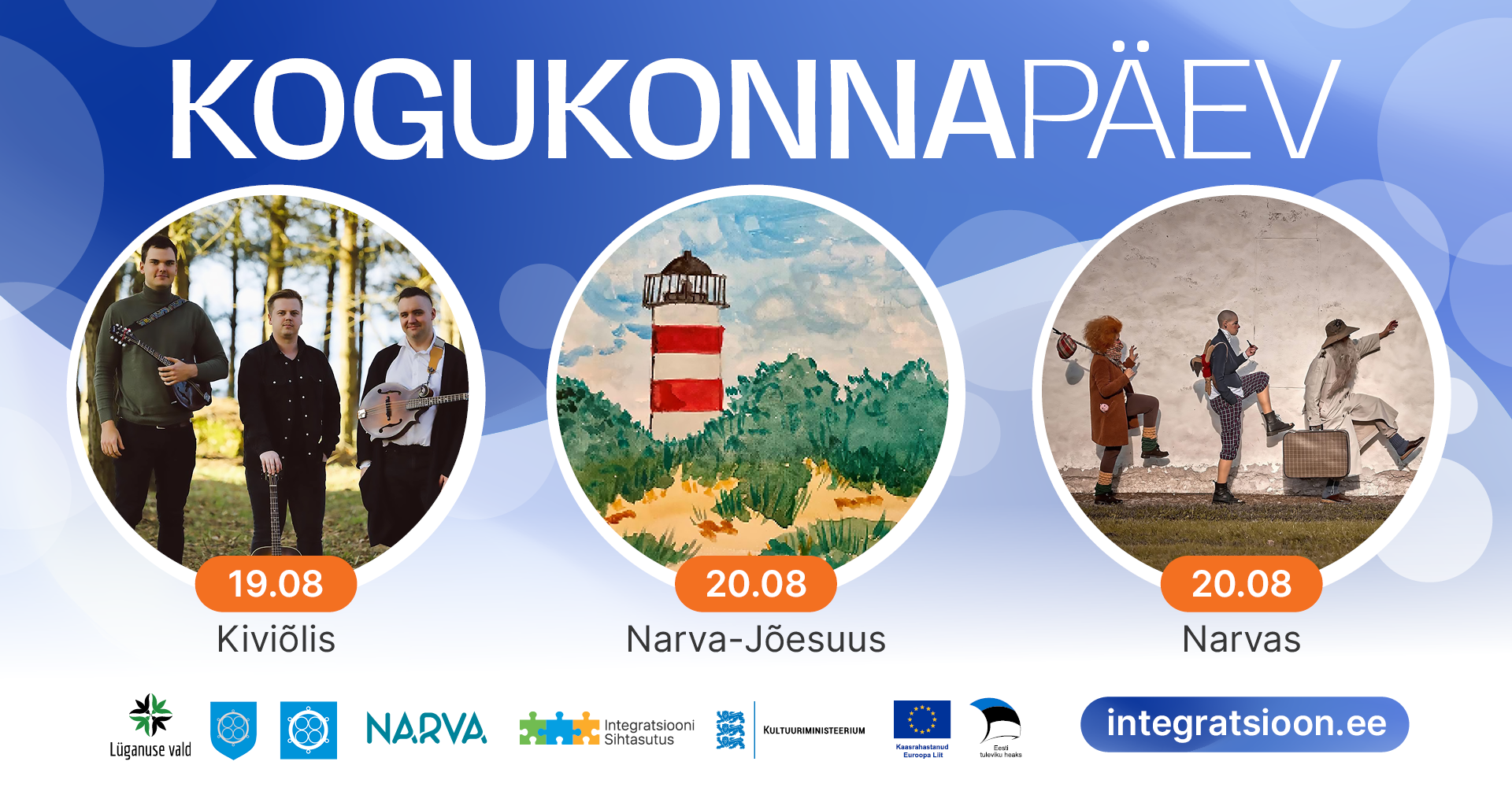
The Integration Foundation invites everyone to Community Days to celebrate the restoration of Estonian independence in three cities in Ida-Viru County. On 19 August we will hold a celebration in Kiviõli and on 20 August in Narva and Narva-Jõesuu.

In celebrating of the restoration of Estonian independence, the events aim to strengthen the bonds between people, support local initiatives, and promote communication, cooperation, and the exchange of experiences. The events include a number of workshops, performances by various creative collectives and discussions on topics of importance to the region. In Kiviõli, for example, in addition to the cultural programme, there will also be a discussion on the reconstruction of the Õunapuu park, in Narva-Jõesuu there will be engaging performances and master classes, and in Narva singing together and having a feast will create a festive atmosphere – there will be a big communal food table where everyone can feel part of a large community.

‘Our events allow everyone to remember that the strength of our region lies in the people – in supporting each other, in dialogue, and in collaboration. We want to create a space where everyone can feel a sense of worth and belonging,’ said Anna Farafonova, Head of Estonian Language House at the Integration Foundation. ‘It’s events like these that help create a stronger sense of community and bring people closer together,’ she added.

According to Jevgeni Timoštšuk, Project Manager of Community Activities in Ida-Viru County at the Integration Foundation, there will be activities for both children and adults. ‘Be sure to come and bring your family, friends, and a good mood! Let’s spend a nice day together, get to know each other, and enjoy being together,’ he invited everyone. 

The event is one of the regional activities organised by the Estonian Language House of the Integration Foundation in Ida-Viru County within the framework of the EU Cohesion Policy measure ‘Supporting community activities that promote integration’.


PROGRAMME:

19 August 2025 at 6 p.m. to 9.30 p.m. in Kiviõli Õunapuu park. 
•    Presentation and discussion of the Õunapuu park project 
•    Lüganuse Kapell 
•    MandoTrio 
•    Pizza baking workshop 
•    Master classes and workshops

20 August 2025 at 12 p.m. to 3 p.m. by the Narva-Jõesuu lighthouse 
•    Performances by creative collectives 
•    Pizza baking workshop 
•    Master classes and workshops
•    Sing-along with Piret Aus

20 August 2025 at 2 p.m. to 5 p.m. in the Narva Rugodivi Community Centre Park. 
•    Performances by creative collectives 
•    Master classes and workshops 
•    Sing-along with Piret Aus and the Estonian Language House Tandem Choir
•    Outdoors festive board 
 

august

Consultations on how to achieve Estonian citizenship

We offer free language courses and training courses on the Constitution and the Citizenship Act for people who wish to become Estonian citizens. This year, we will be organising information sessions to introduce our services in more detail and answer questions from interested parties.

Upcoming Info Sessions:

  • October 30 at 10:00 (online, in Russian). Registration is OPEN in self-service.
  • November 27 at 10:00 (online, in Russian). Registration will open on October 29, 2025 at self-service.
  • December 11 at 10:00 (online, in English). Registration is OPEN in self-service.

If you are not yet a user of our self-service environment, please first create your profile at the following link:
https://iseteenindus.integratsioon.ee/

You can learn more about language learning to apply for Estonian citizenship at:
https://integratsioon.ee/en/language-exam

You can read more about training courses on the Constitution of the Republic of Estonia and the Citizenship Act at:
https://integratsioon.ee/en/citizenship-exam

All those who sign up for the information session will receive all the information and materials also by email, whether they attended or not. 


Kodanikuõpe


7,364 people have already taken part in the Language Friends programme

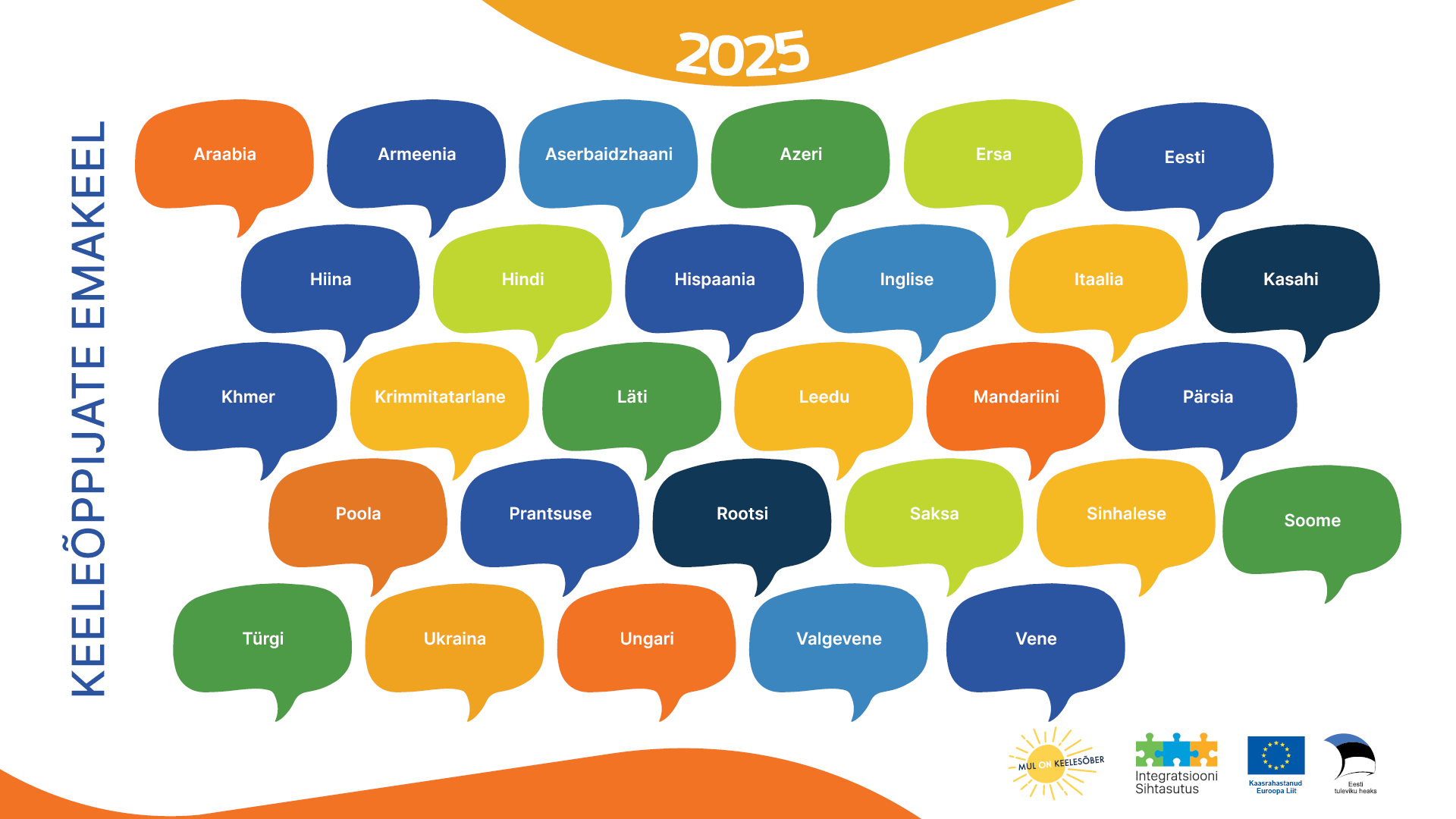
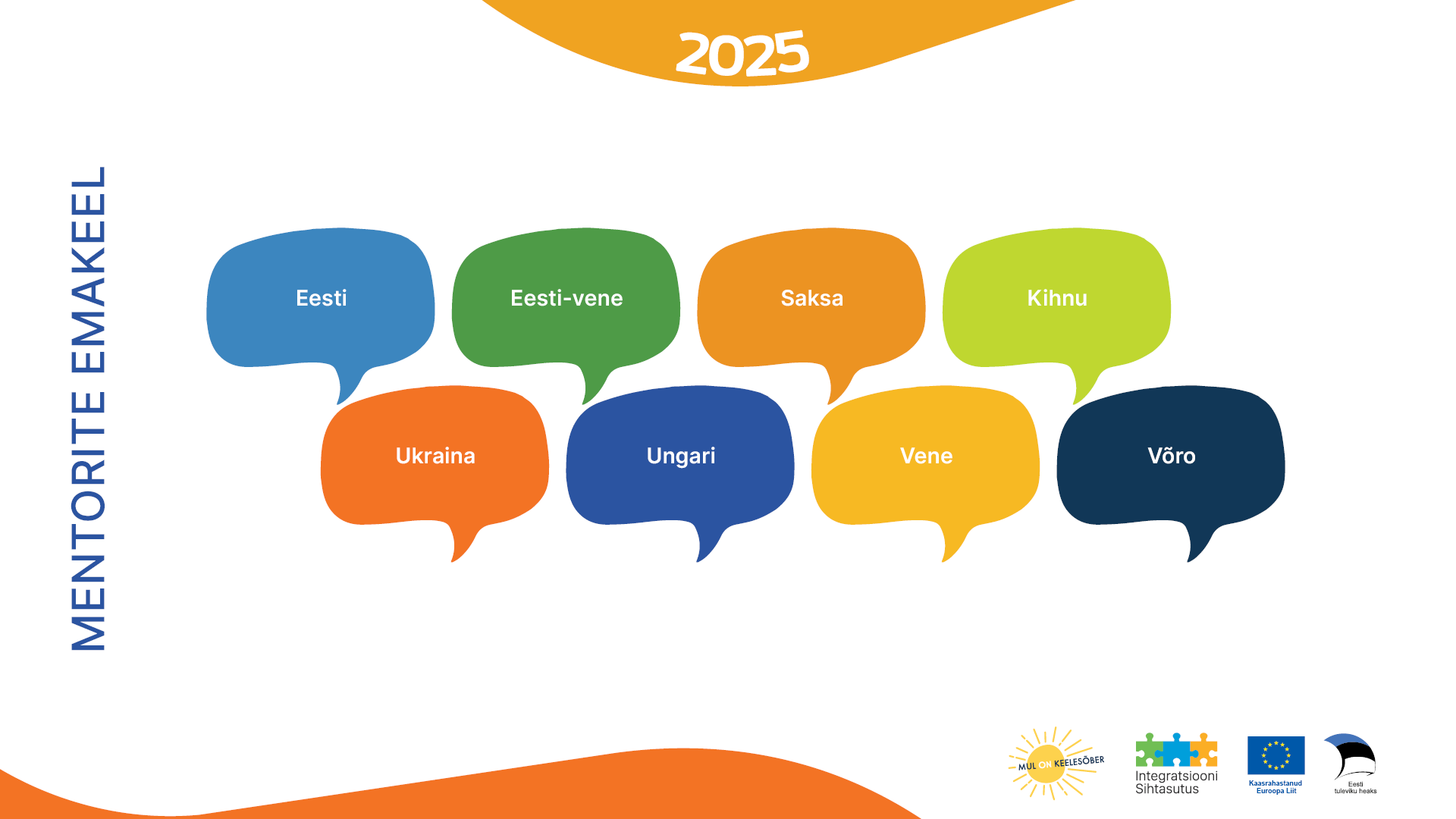
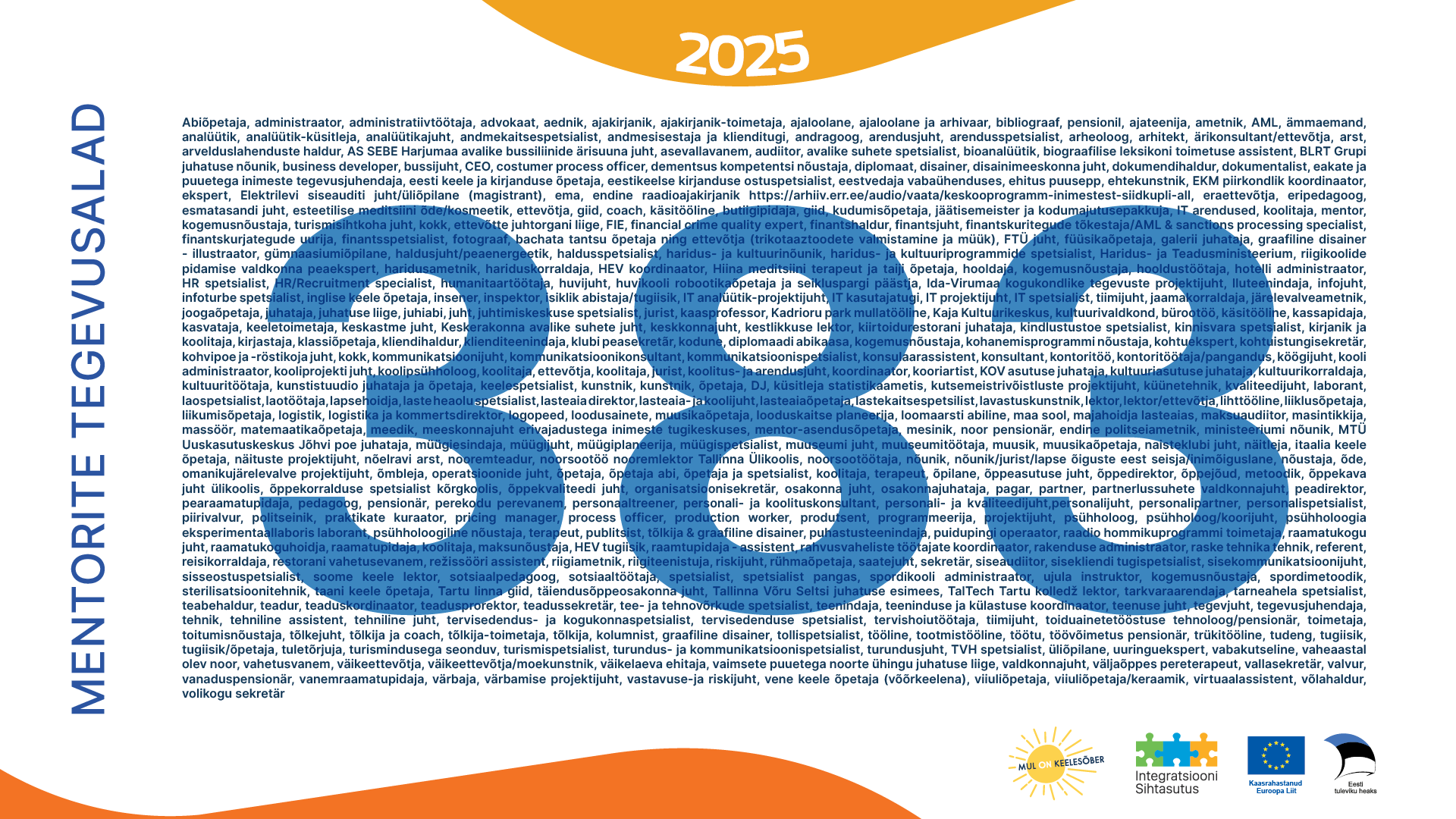
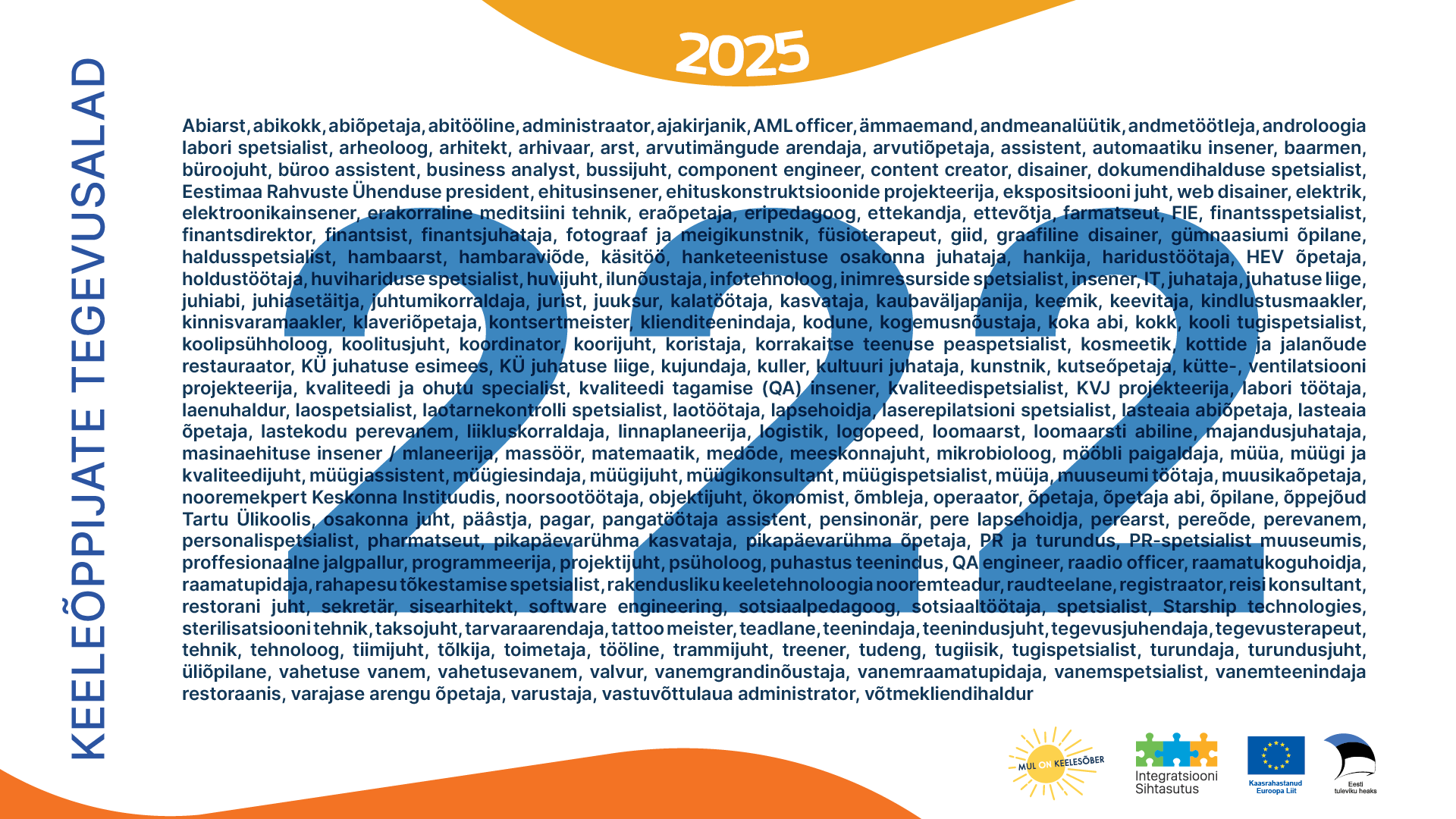
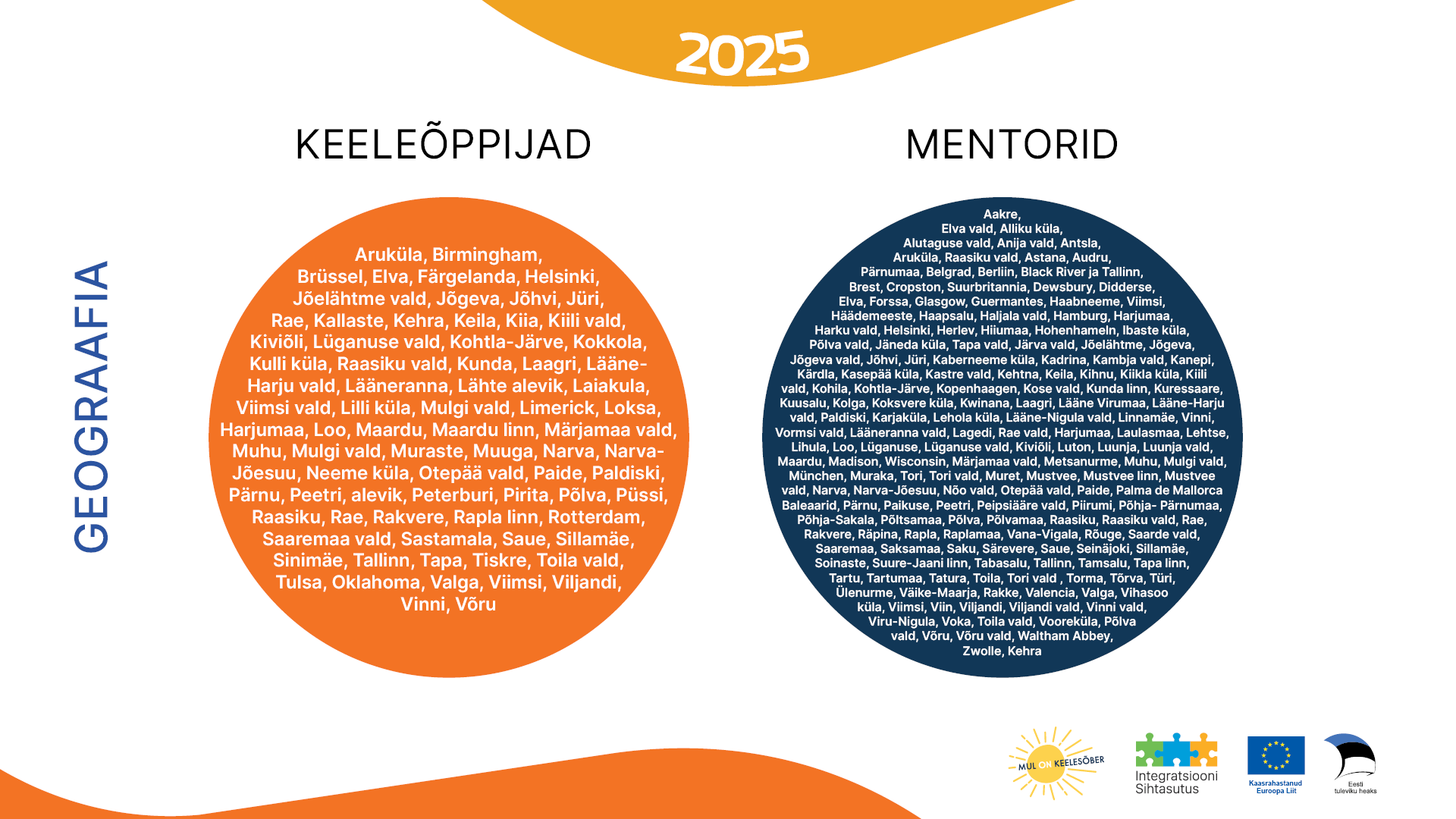
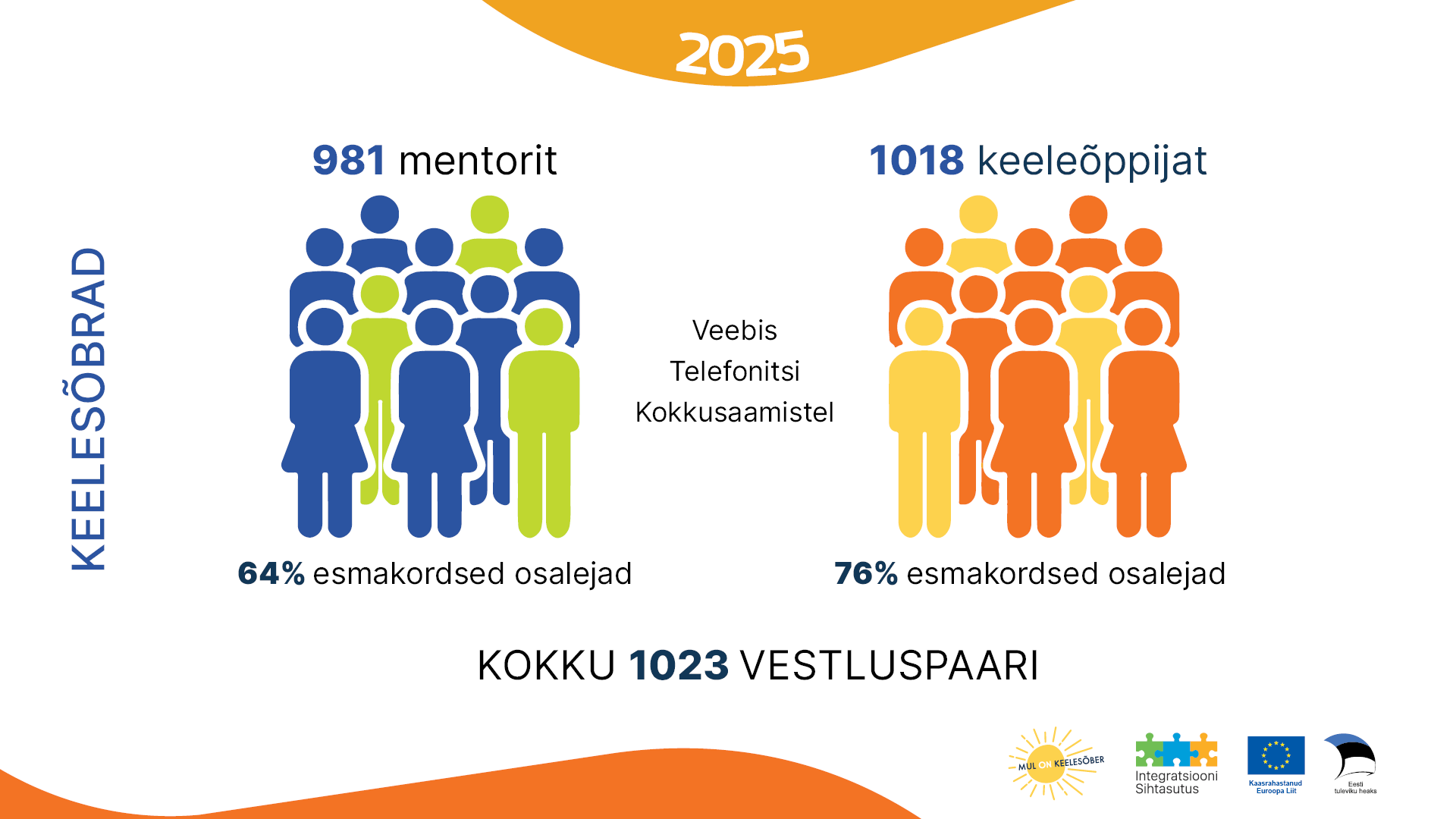
For the sixth year running, the Integration Foundation offered Estonian language learners the opportunity to hold conversations with mentors – volunteers who speak Estonian at a native level. This year, the Language Friends programme featured the largest number of friends of Estonian ever: 1,018 learners and 981 mentors formed 1,023 conversation pairs of language friends.

‘These language friendships show the importance of taking the time to communicate with each other – we keep finding more and more in common, in terms of both our language and our ways of thinking. This spring, 1,999 people from Estonia and beyond have found as little as an hour per week to chat in Estonian about all sorts of things – the goings-on of their families, new experiences, current news, or books they have read. Through these dialogues, the learners have become more confident in their use of the Estonian language and both language friends come to understand each other better – and this way, the ties that connect us from the shores of Peipsi to Kihnu and from Keila to Tõrva have become stronger,’ said Ave Landrat, Head of the Language Friends programme and the Head of Partnerships at the Integration Foundation.

This year, 1,018 Estonian language learners participated in the Language Friends programme, joining through public sign-ups. A total of 981 mentors who volunteered for the programme helped them practise their Estonian. Conversations took place on all kinds of topics at least once a week – online, by phone, or face to face – to practise conversational language.

“The number of language friends growing year by year confirms how necessary it is for language learners to have the opportunity to converse in Estonian. It is a pleasure that they are supported by volunteers, many of whom have been participating for several years. We see that communication often continues after the program and turns into true friendship. Through such conversations and meetings, compatriots with different mother tongues find much more in common with each other than they previously thought. A big thank you to all the volunteers who have found time to support and encourage Estonian language learners,” said Dmitri Moskovtsev, Head of the Integration Foundation.

A team of coordinators brought the language friends together and helped them find the best solutions for their conversations. In addition, they supported the mentors with relevant advice and appropriate learning materials, drawing largely on their own previous experiences of participating in the Language Friends programme.

The Integration Foundation launched the Language Friends programme in 2020 to offer language learners an opportunity to continue practising their language online, as they were unable to participate in events for conversational language practice due to the state of emergency. To date, a total of 7,364 language learners have taken part in the programme.

We are implementing the Language Friends programme with the resources of the European Union’s Cohesion and Internal Security Funds for 2021–2027 and within the framework of project No. 2021-2027.4.07.23-0006 under Order No. 80 of the Minister of Culture of 15 March 2023 ‘Conditions for granting support for the implementation of activities supporting integration, including adaptation, in Estonian society’.

Overview of the sixth season of the Language Friends programme:

Citizenship information sessions are attracting high interest

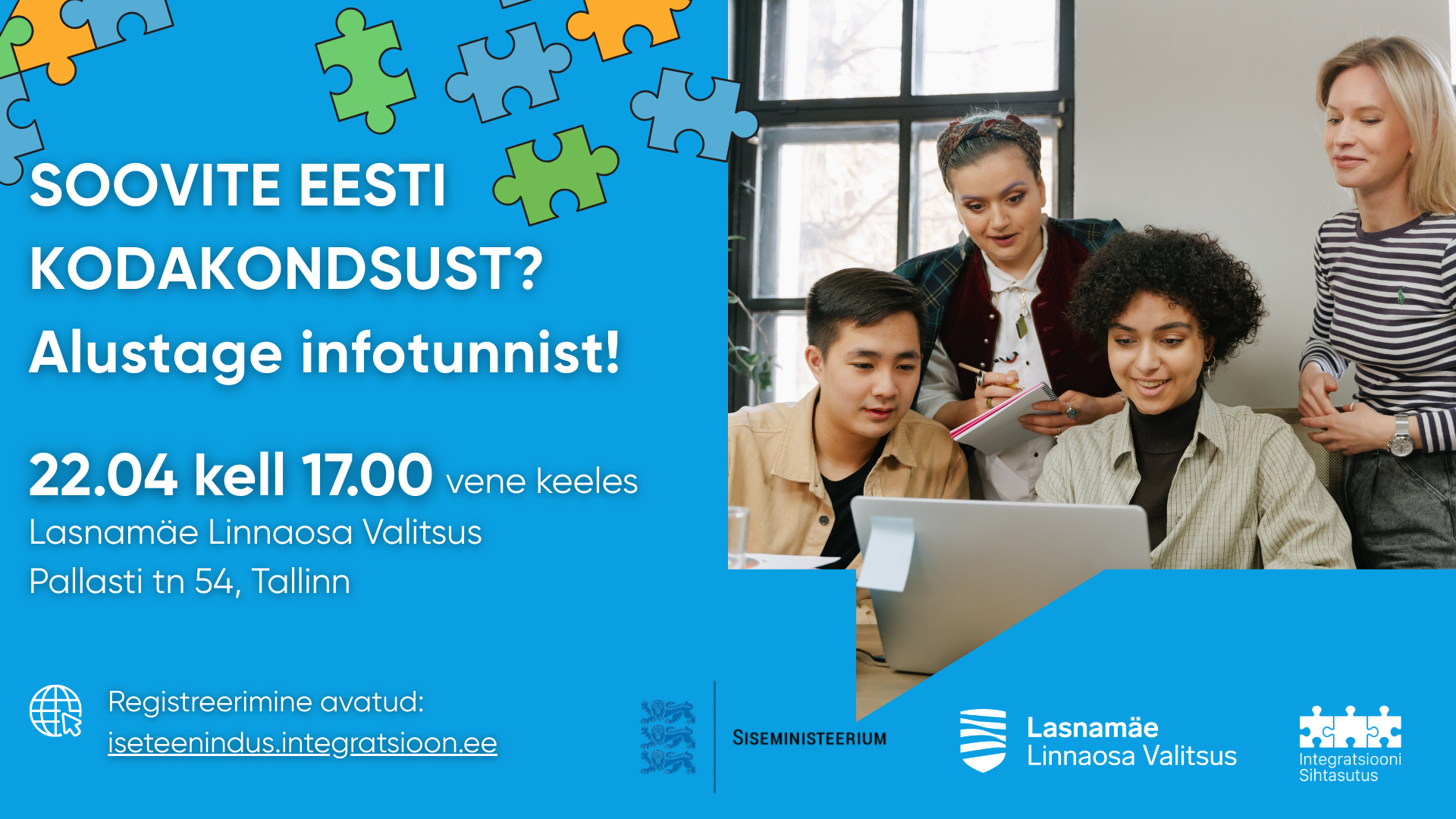
The Integration Foundation is organizing information sessions in May and June to provide details about Estonian language learning and other state support available for acquiring Estonian citizenship. In the first week, over 200 people registered for the online sessions held in Russian and English, and registration is ongoing via the website integratsioon.ee/kodanik.

“The first session on May 5 took place in a very constructive and positive atmosphere, and soon after we began receiving applications for our language learning conract programme, which supports people on their path to citizenship,” said Jekaterina Gvozdeva, Head of Civic Education at the Integration Foundation. “We’re seeing the greatest interest in questions about legislation, language studies, and study leave.”

According to Gvozdeva, the first session saw the most questions about residence permits and the required duration of stay in Estonia – i.e., the legal requirements for applying for citizenship. There was also significant interest in the study leave and compensation available for employed individuals through the language learning contract programme.

“Language learning remains a crucial topic. Although many see achieving B1 level as a challenge, our experience, client success stories, and official statistics show that passing the exam is a very realistic goal for most. Our role is to provide support and encouragement throughout the process,” Gvozdeva added.

Three more sessions will take place before the beginning of summer – on May 12 and 19, and on June 2. There is no limit on the number of participants, and the sessions will be held online, allowing participants to choose a suitable time and language. Registration for the information sessions is available on the website integratsioon.ee/en/kodanik.

Kodanikuõpe


We invite Ukrainian beneficiaries of international protection to mandatory trainings

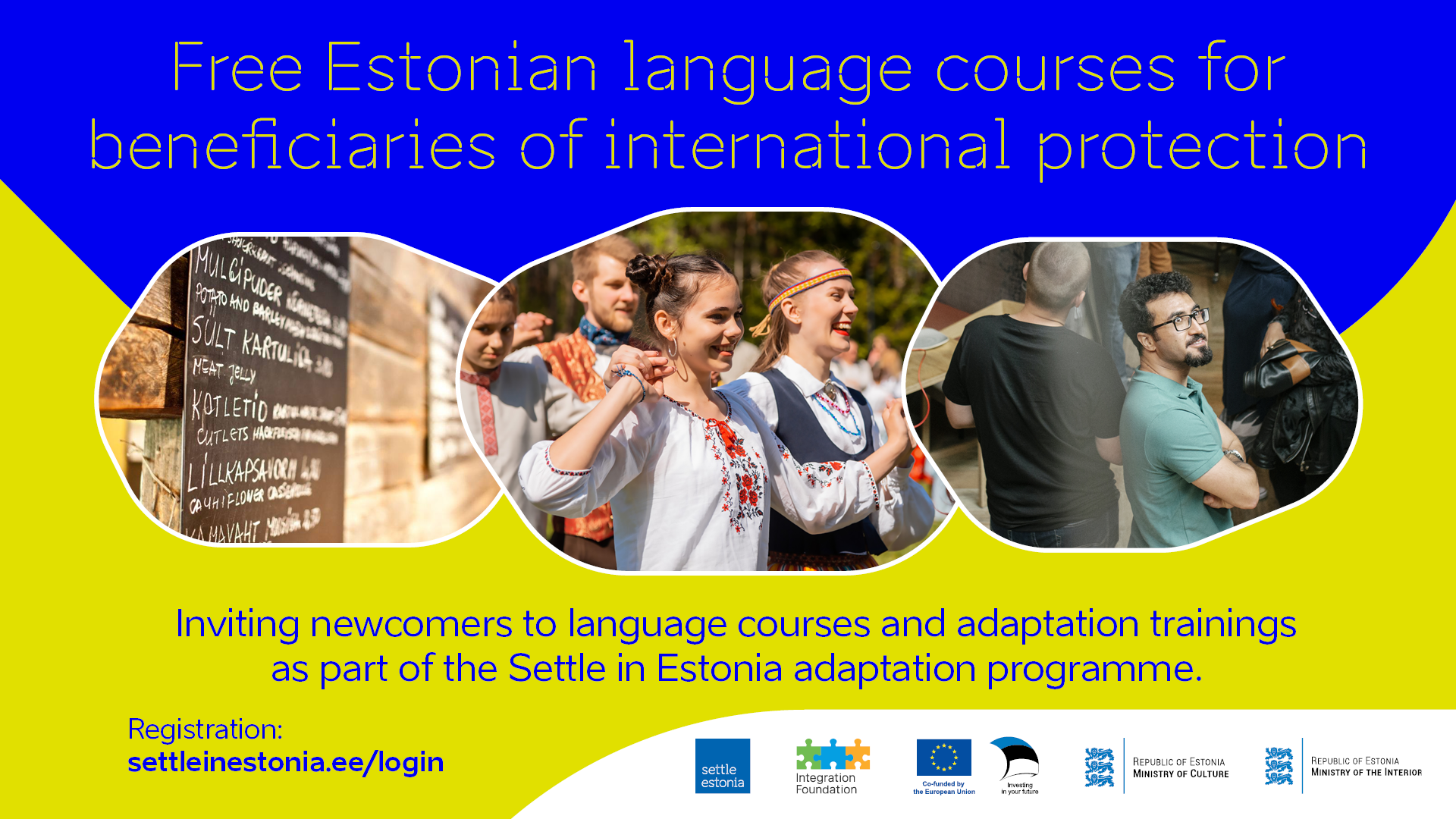
Ukrainian citizens who have been granted international protection in Estonia can attend free Estonian language courses and adaptation trainings provided by the national adaptation programme Settle in Estonia. Participants can start their studies only in May, June, July, or August of this year by signing up now in the programme’s self-service.

For Ukrainian citizens who have come to Estonia from the war zone, the international protection status is accompanied by the obligation to complete Estonian language courses at levels A1, A2, and B1 and adaptation trainings introducing local life, as provided for in the national adaptation programme Settle in Estonia. Completing these courses and trainings is essential for renewing the protection status. 

For Ukrainian citizens who have come to Estonia from the war zone, the international protection status is accompanied by the obligation to complete Estonian language courses at levels A1, A2, and B1 and adaptation trainings introducing local life, as provided for in the national adaptation programme Settle in Estonia. Completing these courses and trainings is essential for renewing the protection status. 

The courses being offered start in May, June, July, or August of this year, either online or on site in Keila, Tallinn, Tartu, Pärnu, Rapla, Valga, and Viljandi. 

Ukrainian citizens can choose the Estonian language course and adaptation training that is right for them from those that have places available. You can check the current status of available places in Estonian language courses on the adaptation programme Settle in Estonia (https://settleinestonia.ee/login), where you can immediately sign up for a suitable course and training. 

The Integration Foundation supports integration in Estonia through a wide range of activities. Among other things, the foundation helps new immigrants – people who have been living in Estonia for less than five years – settle in. To this end, the foundation offers Estonian language courses, adaptation trainings, and other activities, such as field trips and community events, with both state and European Union funding. Full details can be found at https://www.integratsioon.ee/en/kohanemine.  

IMPORTANT

Within the framework of the national adaptation programme Settle in Estonia, newly arrived immigrants with varying legal statuses can learn Estonian and complete adaptation training. An overview can be found at https://integratsioon.ee/en/kohanemine.

Ukrainian war refugees who have been granted temporary protection will be able to register for Estonian language courses again at the end of May. Courses at levels A1, A2, and B1 are planned.

Currently, newly arrived newcomers who have arrived in the course of conventional migration can register for courses starting in August, September, and October. 

Newly arrived newcomers can send specifying questions by email: info@settleinestonia.ee.

Tasuta koolitused


We invite everyone interested in Estonian citizenship to free information sessions

This May and June, the Integration Foundation will host free online information sessions for all residents interested in Estonian citizenship. The sessions will provide details about free Estonian language courses and other state-supported resources available to help people on their path to citizenship. Online information sessions will be held in Russian and English, registration is open at integratsioon.ee/kodanik.

“We are doing our best to ensure that the number of Estonian citizens continues to grow. For example, nearly 60,000 residents with undetermined citizenship live in Estonia, and a recent survey shows that many of them are interested in becoming Estonian citizens. To support them – as well as others interested in citizenship – we offer a range of services, including free language training starting this autumn. We will provide more detailed information about these services during our information sessions,” said Dmitri Moskovtsev, Head of the Integration Foundation.

The first information session will take place on May 5, followed by additional sessions on May 12, May 19, and June 2. Interested individuals can participate online by selecting the time and language that best suits them.

During the sessions, participants will learn how to complete free Estonian language courses up to the required B1 level, how to take part in training on the Constitution and Citizenship legislation, how to apply for study leave compensation, how to register for exams, submit a citizenship application, and more essential information.

“In our work, we often see that for many residents applying for citizenship, the only missing piece of a puzzle is achieving the required level of language proficiency,” explained Jekaterina Gvozdeva, Head of Civic Education at the Integration Foundation. “We support them in overcoming this hurdle by helping them learn the language, build self-confidence, and ease anxieties about the exam. The language learning contract program, funded by the Ministry of the Interior, offers this opportunity.”

More information about the Integration Foundation's services and information sessions can be found at integratsioon.ee/en/kodanik, where you can also register for the information sessions.