
When Nina Paragoso got off the plane from Manila to Tallinn six years ago, she expected nothing more than a short-term work assignment. But what started as a brief stint in a distant, wintry country — one that most Filipinos can barely point to on a map — turned into an unexpected new chapter in her life. Today, Nina calls Estonia home and shares her perspective as a Filipina living in the Baltics through her insightful yet relatable TikTok account.
At the time, Nina was a PR and communication specialist in the fast-paced world of Manila’s startups. She accepted a promotion that included time at her company’s headquarters in Estonia. “I had nothing else going on in the Philippines back then, so I said: let’s try to move to a country which, at that point, all I knew was it's very depressing because it gets very cold, people are not friendly, and the food sucks,” she laughs. The original plan was to stay for six months.
Instead, Nina found a life she never expected: a new career at Bolt, one of Estonia’s tech giants, a cozy home in the small town of Rakvere with her Estonian partner and their cat Loki, and countless new memories, along with the joy of learning the Estonian language.
A Winter Welcome
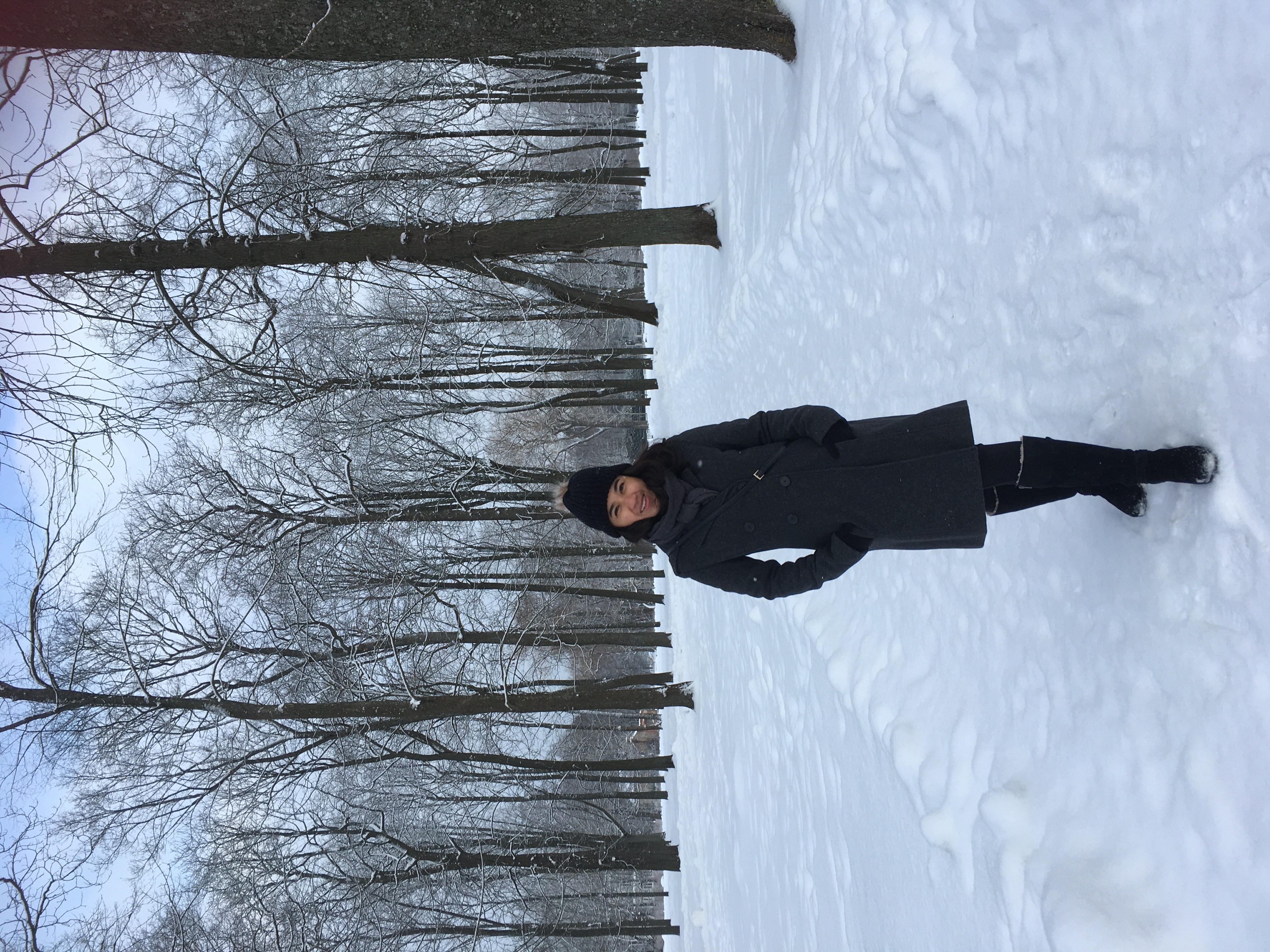
Arriving in Estonia in January felt like stepping into another world. “Snow up to your knees, negative degrees,” she recalls. “I had to get all the proper clothes just to be here.”
Coming from the sunny, fast-paced streets of Manila, it was a real shock to the system. “I had seen snow before, but I had never lived in such a country where there would be minus degrees. It was very shocking at first, but also very exciting because it was a totally new experience.”
At that time, authentic Asian food was hard to come by in Estonia — something Nina hadn't expected. But it turned into a good opportunity to get familiar with Estonian cuisine. She’s even tried what many locals remember fondly from childhood: macaroni with minced meat and ketchup. And when she missed the tastes of home, she was happy to find a few Asian shops where she could buy the ingredients she needed to try to cook the dishes herself.
These days, things have changed. “Now I’ve found some really good restaurants that serve Asian food,” she says. One of her favorite recent discoveries is Nora’s Kitchen, a cozy Filipino spot in Tallinn’s Old Town. “It’s very authentic, the ladies who cook there are Filipino moms who moved here because they met their Estonian husband. So it’s very home cooking style.”
Embracing Estonian Life
Over time, Nina began to find joy in the little things — unexpected details that made everyday life in Estonia feel special. “Being able to walk everywhere is definitely one of the everyday things that I have grown to love. And free public transportation for the citizens in Tallinn as well. If you don’t want to walk, then you can just go and get a bus or a tram or a scooter.”
She also came to appreciate the calm and quiet that defines Estonian life. “If you live in the Philippines, there’s so much pollution, you get to appreciate that there’s always fresh air in Estonia.”
Compared to the constant buzz of life in Manila, Estonian towns felt peaceful and spacious. The streets were quiet, and there were noticeably fewer people around — something that struck Nina immediately. She jokes by referencing a popular observation from the COVID pandemic: “After the 6 feet distance rule was lifted, Estonians were relieved — they could finally go back to their usual 10 feet distance.”
Although she had heard that Estonians tend to be reserved, Nina eventually came to value their sincerity. “In the Philippines, people are very friendly. You can literally say hi to everyone in the street, they would give you a smile back or do small talk. Here, people don’t do that. If you smile at someone in the street, they would think you’re crazy. But at the same time, I have learned to appreciate that Estonians will just make small talk to you if they actually care about what the answer is and take time to have the conversation.”
Learning the Language
Although Nina admits she was skeptical at first, learning Estonian has turned out to be more rewarding than she expected. “In the beginning, when I first arrived here and lived in Tallinn, I thought: nah, I’m not going to learn Estonian, because they say it’s difficult, I'm staying only for a few months and in the capital you can live your everyday life without speaking it.”
But after joining an A1 course, her attitude quickly changed. “I actually had fun learning new words. My teacher was really good — she made the classes fun. And now that I live in Rakvere, where not everyone speaks English, you kind of need to use Estonian more. I don’t think the language is as difficult as people explain it to be, but you really need to focus and take time to practice.”
Being surrounded by Estonian speakers has helped, too — she often surprises herself by how much she actually understands. She especially enjoys small everyday moments where she can use the language, like at the grocery store. “I say that I’m going to pay with a card, or that I don’t need the bag, and the cashiers would be excited about that and even ask me how long I have been learning.”
From a Temporary Stay to a Permanent Life
Although her move to Estonia began as a short-term assignment, Nina now sees her future firmly rooted here.
That appreciation towards the country only deepened during a long road trip she and her partner took from Estonia to Portugal at the start of the Ukraine-Russia war. “We wanted to move to somewhere a bit farther away from the war and just experience something new for the both of us. But the bureaucracy, oh my God… To get all the papers just to get a rental in Portugal was a nightmare.” They visited many beautiful places — from Lithuania to Germany — but in the end, they realized what they already had. “Nothing compares to the comfort that we have felt in Estonia all these years. When we came back, we were certain that Estonia is the best.”
For those thinking of moving to Estonia, Nina has a simple but important piece of advice: “Never compare or never expect that the life you had or the things that you do in your home country would be the same here.” She believes adapting to life in Estonia starts with an open mind. “The people are completely different, but it’s not a bad thing. It’s something you just need to keep an open mind about, learn as you go.”
Instead of focusing on what’s missing or what feels unfamiliar, she encourages newcomers to try and understand the local culture. “Not everything would be perfect in Estonia, but it has its own culture that you need to appreciate and not be ignorant about.”
The Settle in Estonia Programme is a free educational programme provided by the Estonian state which is intended to help the foreigners who have arrived in Estonia to adapt and become accustomed to local life more easily. We offer courses for people who have come to live or study in Estonia and have lived here for less than 5 years. For example, war refugees to whom Estonia offers international or temporary protection, as well as people who have come to Estonia to work or do business here or relocate with their family member. The adaptation program The Settle in Estonia Programme is free for participants. We offer language training and other courses to help you cope with everyday life in Estonia. Read more and register: https://integratsioon.ee/en/kohanemine. The adaptation programme is co-funded by the European Union and the state budget.