
Imagine the scene: a train rattling through the sun-drenched hills of Northern Italy. Within five minutes of sitting down, you’ve shared your life story with a stranger, argued about the best way to cook pasta, and exchanged three phone numbers. Now, contrast that with a bus ride through Tallinn in the dead of November. It is silent. Every passenger sits exactly one seat apart, their bags acting as protective shields on the neighboring chair.
For many, this transition would have been a cold shower. For Mattia Dossetto, an Italian former chef and social worker, these cultural contrasts were an inevitable part of the 'mindset shift' he was looking for when coming to live in Estonia. After nearly three years in Tallinn, Mattia has moved from the professional kitchen to the heart of Estonian social projects, helping other expats navigate their own journeys and find their roots and wings.
A Love That Led to a Leap of Faith
Mattia’s journey to Estonia actually began in the Czech Republic, where he met an Estonian young woman while working for Erasmus+. “So yes, like many other Italians that I have met, the reason for moving to Estonia is that I fell in love with an Estonian woman,” he laughs.
Together, they weighed their options, but Estonia’s professional landscape won him over. “The main reason was love, but another was career prospects. In Italy, it's easier to start things, but it's difficult to get stability. I was searching for a different mindset and I really liked what I saw in Estonia when I first visited.”
E-Estonia: 15 Minutes to Start a New Life
Mattia’s leap of faith meant moving to Tallinn in the dark of November. However, the gray weather was quickly offset by the country's digital efficiency. “I’ve heard about Estonia as an IT country and Tallinn being a very digital place, but I had no idea what that meant,” he admits. The speed of the system was an immediate revelation: “I opened my company in 15 minutes,” he says, noting the sharp contrast to the bureaucratic hurdles of his home country.
But a new country meant starting from scratch. With a background as both a chef and a social worker, Mattia initially took the most practical route. “I started working in restaurants—the first job I found,” he recalls. However, his second year in Estonia marked a significant shift. He began collaborating with various Tallinn City departments, including the departments of health, culture, and education. Today, he is a full-time project leader through Vaimse tervise sari, focusing on the two areas he is most passionate about: mental health and integration.
Building Human Connections
Mattia now uses his own experiences to guide others through the process of integration. One of his initiatives, Roots and Wings, encourages expats to embrace their heritage while learning how to navigate Estonian society. “It’s easier to complain about everything. It’s more difficult, but more beneficial, to ask ourselves, ‘Where could I improve? What steps should I take so that this problem changes into an opportunity for growth?’” he explains.
Another project he organizes is called Intercultural Dinners, bringing locals and newcomers together through the universal language of food. For Mattia, true integration happens through “acting together and cooperating, not just talking.”
But his impact reaches beyond the expat community. Together with his Estonian partner, Mattia visits schools and youth centers to focus on another critical area: mental health for the younger generation. “We create a space where the youth feel safe and encouraged to share about their emotions,” he says. Rather than providing clinical counseling, they focus on prevention, using creative practices like poetry and painting to help young Estonians share their dreams and future plans. “We try to build a human connection and fight isolation, especially among young people growing up in a very digital world.”
Language is the Key
Mattia is a firm believer that language is a fundamental part to integration, even if your plans here are not certain. "I’ve heard from many expats: 'I don’t know how long I will be here, so I will not study the language.' This doesn’t help. It’s like driving a car with a brake on all the time."
He recalls a breakthrough moment at a Prisma checkout counter. "The first time that I spoke Estonian at a cashier, this old lady smiled and answered me in Estonian, she was so happy! I was not speaking perfectly, but it encouraged me to do it more."
Having just passed his A2 language exam, Mattia argues that language is a big signal of respect. “I have also noticed that Estonians open up much more if you speak the language. It's not the same if you don't. In Tallinn you could surely live with just English, but you’re kind of in a bubble in my opinion. I wanted to avoid that."
To Feel Like an Estonian
One major resource in Mattia’s journey was the adaptation program Settle in Estonia, which he utilized to the fullest. Rather than just picking one module, he dove into everything the program offered, from business to daily life. “I did all these courses. Apart from the information you get, I think it’s really the mindset of ‘I spend time learning about the country.’ This changes how you approach the place,” he explains.
Beyond the classroom, the program’s cultural excursions proved to be a turning point in his adaptation. “This was amazing—learning the history, the cultural symbols... This was the time that I felt the feelings of being an Estonian, which is different from just getting information.” For Mattia, these free resources are essential for anyone wanting to move beyond being a visitor to truly becoming part of the community.
The Soul of Estonia
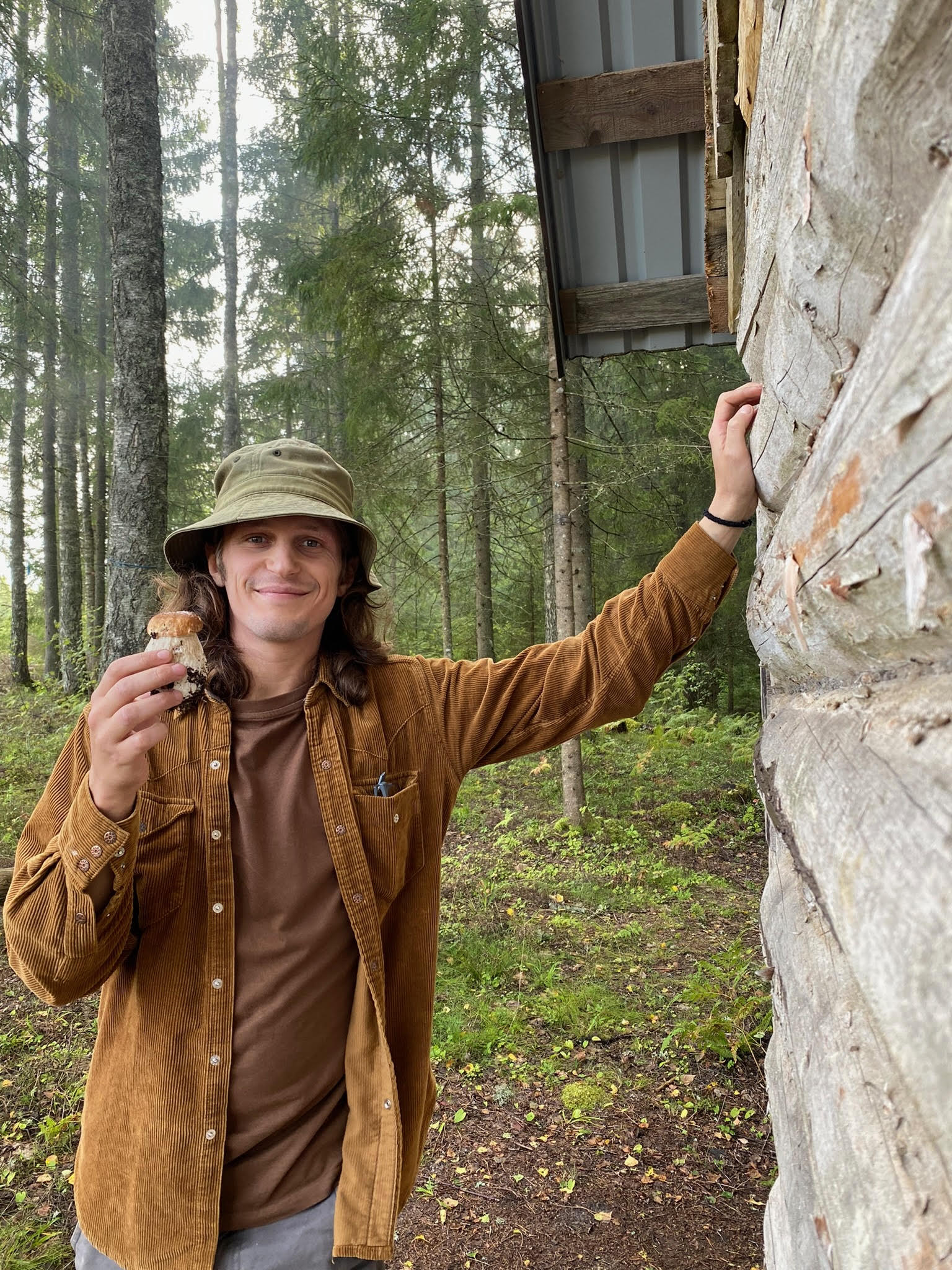
Beyond the digital efficiency, Mattia has fallen in love with the Estonian 'soul'. Spending time at the girlfriend’s family cottage in the countryside—without electricity and with water fetched from a spring—helped him understand the locals’ closeness with nature. “At the beginning, when people spoke about the forest, I didn't understand it. But now that I have been there, I get it. This contact with nature is so direct; Estonians really live in harmony with nature.”
His most emotional connection to the country happened during the Song Festival (Laulupidu). “I had heard the stories of the Singing Revolution because my partner’s family was very involved in the events surrounding independence. But I was surprised by how much I was moved by it when I actually attended the event. I saw a grandfather with a little boy on his shoulders; they were both singing, and the grandfather had tears in his eyes. It was incredibly touching to see that.”
Whether ice skating on the frozen seaside of Haapsalu or leading his social projects in Tallinn, Mattia Dossetto has settled into a rhythm that works for him. He recognizes that the country’s quirks aren't always easy to navigate, but for Mattia, they are what define the experience. “Estonia is not normal at all!” he concludes with a laugh. “It’s a very specific place—in a beautiful way.”
Mattia’s Tips for a Smooth Landing in Estonia
- Release the Brake. Don’t wait until you’re sure how long you’ll stay to learn the language. Studying Estonian is a signal of respect, and locals will open up much more when they see you trying.
- Move Beyond Information. Take advantage of programs like Settle in Estonia. Don't just read about the country—go on cultural excursions and visit museums. Getting the historical context helps you understand the "why" behind the local way of life.
- Don't Limit Yourself to Tallinn. To truly know Estonia, you have to leave the capital. Explore the forests and visit little villages in the countryside.
- Find Your Community through Action. True integration happens when people do things together. Join expat Facebook groups, attend free language clubs, or go to board game nights.
- Attend National Events. To understand the Estonian soul, you must experience the Song Festival (Laulupidu) or a village bonfire on Midsummer’s Eve (jaanipäev). These are the moments where the history and resilience of the people become visible.
The Settle in Estonia Programme is a free educational programme provided by the Estonian state which is intended to help the foreigners who have arrived in Estonia to adapt and become accustomed to local life more easily. We offer courses for people who have come to live or study in Estonia and have lived here for less than 5 years. For example, war refugees to whom Estonia offers international or temporary protection, as well as people who have come to Estonia to work or do business here or relocate with their family member. The adaptation program The Settle in Estonia Programme is free for participants. We offer language training and other courses to help you cope with everyday life in Estonia. Read more and register: https://integratsioon.ee/en/kohanemine. The adaptation programme is co-funded by the European Union and the state budget.