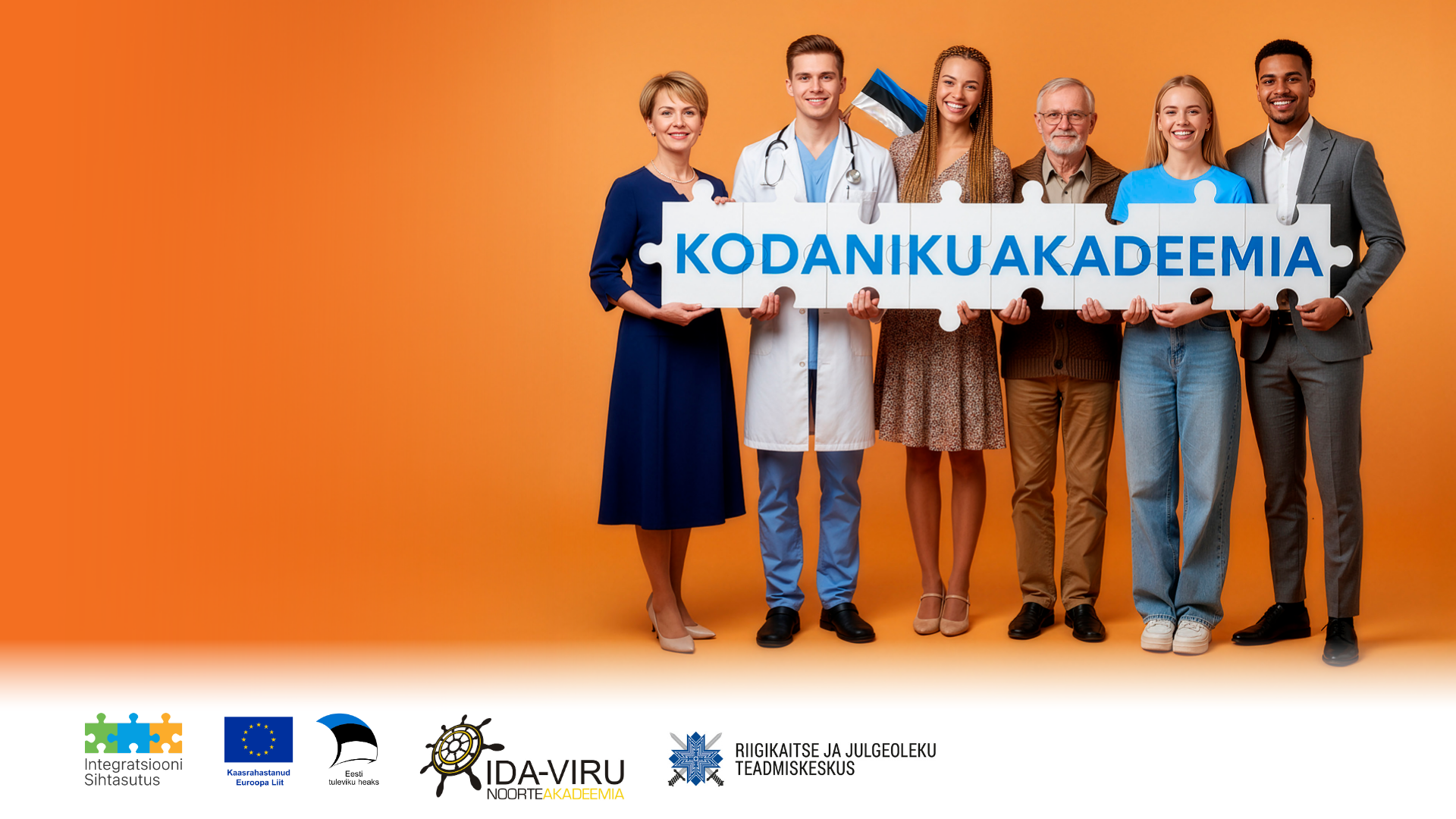
At the end of September, the Integration Foundation’s Kodanikuakadeemia civic education programme will begin in Harju County and Ida-Viru County, organised by Ida-Viru Noorteakadeemia. The goal of the programme is to help participants better understand the functioning of the Estonian state and society, as well as opportunities for civic engagement.
Kodanikuakadeemia is a practical learning programme comprising three modules, running until the spring of 2027. The programme covers being a citizen, security, the work of state institutions, and participation in public life. The studies combine discussions and practical activities: the schedule includes simulations, meetings with representatives of various institutions and organisations, visits, and study trips.
According to Jekaterina Gvozdeva, Head of Civic Education at the Integration Foundation, it is essential that people living in Estonia understand how the state and society function and what opportunities they have to participate in public life. ‘Language proficiency is very important for integration, but it is equally important that a person feels part of Estonian society, understands their rights and responsibilities, and knows how to contribute to the development of their community and society. In the Kodanikuakadeemia programme, participants can discuss these topics, ask questions, and connect what they learn to their daily lives and experiences,’ said Gvozdeva.
The first module of the programme, ‘Being a Citizen’, begins on 27 September with meetings in Narva and Tallinn. Participants will discuss the meaning of Estonian citizenship and the possibilities for acquiring it. Subsequent meetings will also cover civic roles, rights and responsibilities, the values and constitutional foundations of Estonian society, and civic initiatives.
‘Our goal is to give participants not only useful information but also an opportunity to conceptualize how rights, responsibilities, and the work of state institutions are connected to their daily lives. Therefore, the meetings are based on discussions, practical situations, and direct interaction with representatives of institutions and local communities,’ said Dmitri Teperik, Head of Ida-Viru Noorteakadeemia.
The second module, running from December to February, will cover security, national defence, preparedness for crisis situations, and coping in emergencies. The third module will take place from March to May 2027 and will focus on the functioning of state institutions, legislation, elections, e-services, and opportunities for participating in social and political life.
Kodanikuakadeemia is intended for adults who have lived in Estonia for more than five years and whose native language is not Estonian.
The first meetings will take place on Sunday, 27 September:
- In Narva at 12 p.m. in the Rugodiv Cultural Centre
- In Tallinn at 12 p.m. in the Old Town building of the Tallinn Folk High School
Meetings take place in the target group’s language, but if necessary, also in a combined format or with translation.
More information and registration: www.integratsioon.ee/en/kodanikuakadeemia
Kodanikuakadeemia is carried out with the support of the European Union’s Cohesion and Internal Security Funds for 2021–2027 and within the framework of project No. 2021-2027.4.07.23-0006 “Activities Supporting Estonian Language Learning and Civic Education” under Order No. 80 of the Minister of Culture of 15 March 2023 “Conditions for granting support for the implementation of activities supporting integration, including adaptation, in Estonian society”.