


SPEAKERS
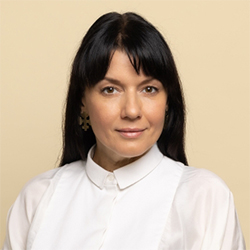
Heidy Purga
Heidy Purga has served as Estonia’s Minister of Culture the Minister of Culture of the Republic of Estonia since April 2023. A radio journalist, producer and DJ, she joined the Reform Party in 2014 and was elected to the Riigikogu in both 2015 and 2019. With over 15 years of experience in Estonian electronic media, Purga has worked in television and radio as an editor-in-chief and producer. She headed the Estonian National Public Broadcasting radio station, Raadio 2, from 2004, and served as head producer of Estonia's premier TV music show Eesti Laul (the national Eurovision selection) from 2009 to 2015.
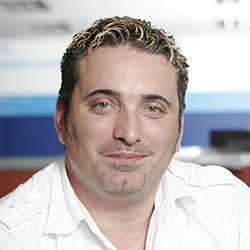
Andrew Sheridan
Andrew Sheridan works for the British Council and leads their work on promoting peace and social cohesion. Although he has delivered work all over the world, he has a particular interest in Central and Eastern Europe. For almost 30 years, he has designed and led large scale actions and programming that has focused on promoting trust between communities across the region. More recently, he has had a particular focus on the threat that disinformation is posing to the peace and stability in Europe and beyond. He is an advocate for approaches that do not call purely on cognitive skills development but look beyond that to the ways in which disinformation polarises communities, citing that tackling issues of social cohesion and inequality are critical to immunising societies against the threats from disinformation.
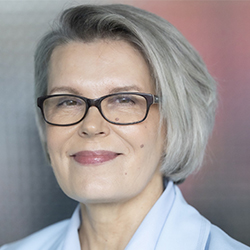
Rūta Muktupāvela
Tenured Professor Rūta Muktupāvela, PhD in Theory of Culture, is a lead researcher at the Latvian Academy of Culture, and represents Latvia in the UNESCO Intergovernmental Committee for the Protection and Promotion of the Diversity of Cultural Expressions. Former advisor on Cultural Policy to the Minister of Culture of the Republic of Latvia (2024–2026), Rector of the Latvian Academy of Culture (2014–2024), President of the Latvian Rectors' Council (2018–2024), and Head of the Latvian National Council of Culture (2017–2025). She heads the national research programme “CERS, Cultural and Creative Ecosystem of Latvia as a Resource for Resilience and Sustainability” (2023–2026). She is institutional project leader and lead participant in “CRIES, CRIses Established Singing, investigating the inherent potential of collective singing in times of social crises in the Scandinavian and Baltic regions” (2025–2027, EU CHANSE/HERA). She was institutional leader and leading researcher in the Horizon 2020 project “CoHERE: Critical Heritages: Performing and Representing Identities in Europe” (2016–2019), and leader of the project “Community Participation in Cultural Heritage Governance: Practices, Developments and Challenges” (2018–2021). She participates as a soloist in musical performances and concerts, based on Baltic traditional music. In ensemble with Valdis Muktupāvels she has performed in the Baltics, USA, Canada, India, Norway, China, Japan, Sweden, Finland, Belgium etc.
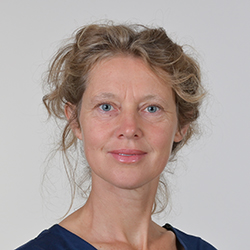
Claske Dijkema
Dr. Claske Dijkema is an Assistant Professor at the Bern University of Applied Sciences (BFH) and a member of the Institute for Social and Cultural Diversity. She is interested in questions of belonging: who is considered part of society, who is entitled to rights, and what peace means for people who come to Europe seeking refuge from violence. Her interdisciplinary background combines sociology, geography, and peace studies, with a particular focus on how people affected by displacement, marginalisation, and conflict create spaces of belonging and agency in everyday life. Together with Sarah Schilliger, she leads a collaborative learning project on solidarity and caring cities, exploring where and how solidarity is experienced and practiced in urban environments. Claske holds a PhD in Human Geography from Université Grenoble Alpes and was awarded a Marie Curie Fellowship at swisspeace. She has extensive international research and teaching experience and has held leadership positions in both academia and civil society. Her work is characterised by participatory and practice-oriented approaches, developed through close collaboration with community organisations, public institutions, and cultural actors. She has published extensively in international peer-reviewed journals, demonstrating how local peace initiatives, inclusive practices, and collaborative forms of knowledge production can strengthen social cohesion in diverse societies. She currently leads several projects on inclusion and participation, including JETZT. DA., which develops innovative ways of fostering cultural participation and meaningful encounters between refugees and local communities.
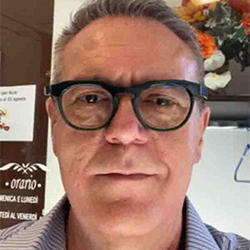
Andrea Volterrani
Prof Andrea Volterrani is a Sociologist of cultural and communication processes, associate professor at the University of Rome Tor Vergata, he is Director of the Master in Social Communication and of the Master in Social Farming. He teaches Theory and technique of mass communication and Sociology of communication in several degree courses. He has coordinated and runs European projects on community resistance, social communication, climate change and communication, prevention and health communication, training for cooperative development. He is involved in research, training and consultancy on social communication and prevention, the third sector and volunteering, new forms of mutuality and social community development.
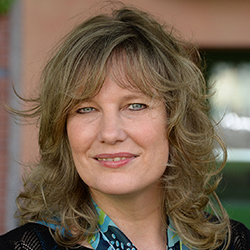
Dietlind Stolle
Prof Dietlind Stolle is the James McGill professor in political science at McGill University and fellow of the Royal Society of Canada. She is widely recognized both within Canada and internationally as an expert on political behaviour, social capital, ethnic diversity, social cohesion and democracy. Her current projects include work on democratic backsliding; gender and politics including the role of pregnancy; European solidarity; and emerging cleavages in European party politics. Stolle has served as the Director of the Centre for the Study of Democratic Citizenship (CSDC) from 2013-2020 and as co-director of the European Union Centre of Excellence. She is currently co-leading the EUI-YouGov European Solidarity Study in more than 20 democracies.
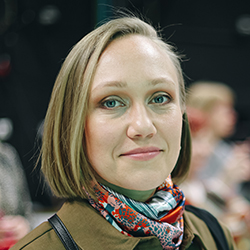
Julia Rodina
Julia Rodina - media expert, digital and media literacy trainer, founder of the NGO Tuleviku Meedia, who has worked in the media as a journalist, editor-in-chief and brand manager. Since 2017, she has been organising and delivering media literacy and information resilience projects and lectures for various target groups. Since 2022, has organised and delivered over 20 projects focusing on media literacy for various target groups, including educators and youth.
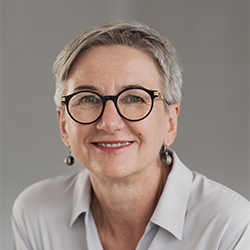
Dalia Bankauskaitė
Dalia Bankauskaitė is an interdisciplinary expert in security policy, strategic communication, and societal resilience, with academic and policy experience across the Nordic-Baltic region and Eastern Europe. She holds positions at Vilnius University and the think tank CEPA, and has advised national governments, NATO-affiliated institutions, and EU projects. In recent years, she has been engaged in EU Integration facility projects in Ukraine, supporting the country’s broader alignment with the EU acquis and its long-term integration efforts; in Armenia, she contributed to the EU project strengthening state communication capacities and capabilities. With decades of experience across government, academia, and consulting, her work focuses on advancing the understanding of comprehensive defence and the whole-of-society approach to security. As a member of the expert group for the Partnership for Peace Consortium (PfPC) under the NATO DEEP programme, she led the theme on societal resilience and co-developed the Reference Resilience Curriculum (RRC) for NATO allies and partners. She is currently involved in several initiatives on Baltic youth resilience and foresight capacity-building for young people in the Baltic Sea region.
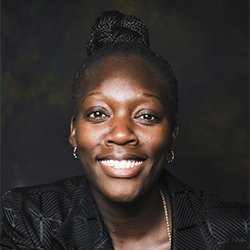
Silvia Kakembo
Silvia Kakembo is an author and Deputy CEO of the Swedish think tank Arenagruppen (the Arena Group). She is also the co-founder of Integrationsbyrån (the Integration Agency), a non-profit initiative working to make integration in Sweden more effective and humane. Through Integrationsbyrån, Silvia has travelled across Sweden to meet people who have migrated to the country and listen to their first-hand experiences of settling in, finding work and building a new life. These conversations form the foundation of the initiative's report, which sets out 31 concrete policy proposals grounded in the realities migrants themselves describe. The report has been presented to a majority of Sweden's political parties with the aim of influencing national integration policy. Silvia brings extensive experience from both politics and communications. She previously served as a political adviser at the Swedish Ministry of Finance under Magdalena Andersson, then Minister for Finance and later Prime Minister. She has also headed a public relations agency. Silvia holds a degree in business and economics from the Stockholm School of Economics. Her work combines economic analysis, policy expertise and a strong commitment to bringing the voices of those most affected by integration policy into the political debate.
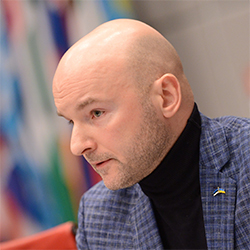
Dmitri Teperik
Dmitri Teperik is Director-General and co-founder of the National Centre of Defence & Security Awareness (NCDSA) in Estonia. For over 15 years he has worked on societal resilience, social cohesion, cognitive security and countering foreign information manipulation in Estonia, the Baltic states and Ukraine. His research explores identity, belonging and trust, including studies of Russian-speaking young people in Estonia, narrative literacy among ethnolinguistic minority, and community resilience in Ida-Viru County, where he leads civic engagement work under the Ida-Viru Future Vision 2050 initiative. From 2016 to 2023 he headed the Resilient Ukraine programme and he co-founded the international training platform Resilience League. He has authored over 70 publications and holds an M.Sc. from the University of Tartu.

Anna Karolin
Anna Karolin is a psychologist, trainer, and facilitator who specialises in clear communication, reasoning and understanding human behaviour. In her work, Anna combines her knowledge of psychology and political science, drawing on her extensive experience as a top debater and behavioural analyst. She has worked for organisations in various sectors and has focused on issues relating to people’s attitudes, behaviour and public speaking. At the conference, Anna brings to the discussions a keen analytical mind, excellent listening skills and the ability to view complex issues from a variety of perspectives.

Indrek Treufeldt
Indrek Treufeldt is a journalist and lecturer at Tallinn University who has worked in journalism for over 25 years. He has worked in the broadcasting sector in news editing, managed creative projects and production teams, and served as ETV’s correspondent in Brussels at the time Estonia joined the European Union. He is a recipient of the Valdo Pandi Journalism Prize (2016). Treufeldt has served as communications adviser to two Estonian presidents. He has also taken part in media investigations into the sinking of the ferry Estonia and was a member of the international commission that investigated the exchange of information immediately following the shipwreck. At Tallinn University, he teaches journalism and supervises students. When it comes to teaching, he considers practical learning to be of the utmost importance. He has extensive experience in qualitative text analysis. He also has a background in engineering, which is why he is interested in technology and new ways of working. Treufeldt holds a PhD from the University of Tartu. His dissertation examined the journalistic construction of facts in various social contexts. Indrek Treufeldt is currently putting the finishing touches to a monograph on the history of Estonian broadcasting. This year marks the 100th anniversary of the first regular radio broadcast in Estonia.
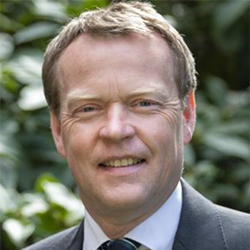
Christophe Kamp
Christophe Kamp (Netherlands) is the seventh OSCE High Commissioner on National Minorities, appointed in December 2024. Prior to his appointment, Kamp served as the Permanent Representative of the Netherlands to the OSCE. He also worked as Director of the office of the OSCE High Commissioner on National Minorities. Christophe Kamp has nearly 25 years of experience as a diplomat in the Foreign Ministry of the Netherlands and the European External Action Service, with assignments in Europe and Africa. Before joining the Foreign Ministry of the Netherlands in 2001, Kamp worked at the UN Department of Political Affairs in New York and with the UN Human Rights Field Operation in Rwanda. Kamp has a Master’s degree in Political Science from Leiden University and a Master’s degree in Public Administration from the Harvard Kennedy School.